2017
The Blind Spot
A collection of brain-reactive virtual-reality scenes that propose a feedback loop in which experiencing the space modifies it.
A collection of brain-reactive virtual-reality scenes that propose a feedback loop in which experiencing the space modifies it.
The Blind Spot is an artwork comprising two systems interacting with each other. On one hand, a VR headset is used. On the other, the work uses an EEG sensor as a form of brain–computer interaction. Between the two systems lie human perception and processing.
This human intermediary drives the generation and transformation of immersive visual and audio environments through readings of brainwaves and brain activity.
In turn, the newly created visuals and brain-reactive audio stimulate the brain, producing a feedback loop between virtual reality and human perception. The technological setup extends its signal processing through human brain activity. The system is an interface that creates two-way generation and influence of content.
The project comprises five scenes presenting different EEG-reactive environments. The pipeline uses EEG data to generate textures in real time with Processing; these textures are then mapped to pixel and vertex shaders in Unity.
This technique, an idea first proposed by Christian Clark, was implemented as follows. EEG data is captured using a Muse sensor and sent over OSC to our Processing program. In Processing, the EEG data is passed to a shader that generates a texture. The texture is sent using Syphon to Unity, where it controls particle-system parameters, distorts geometry through vertex shaders, moves lights, and provides textures for large geometries.
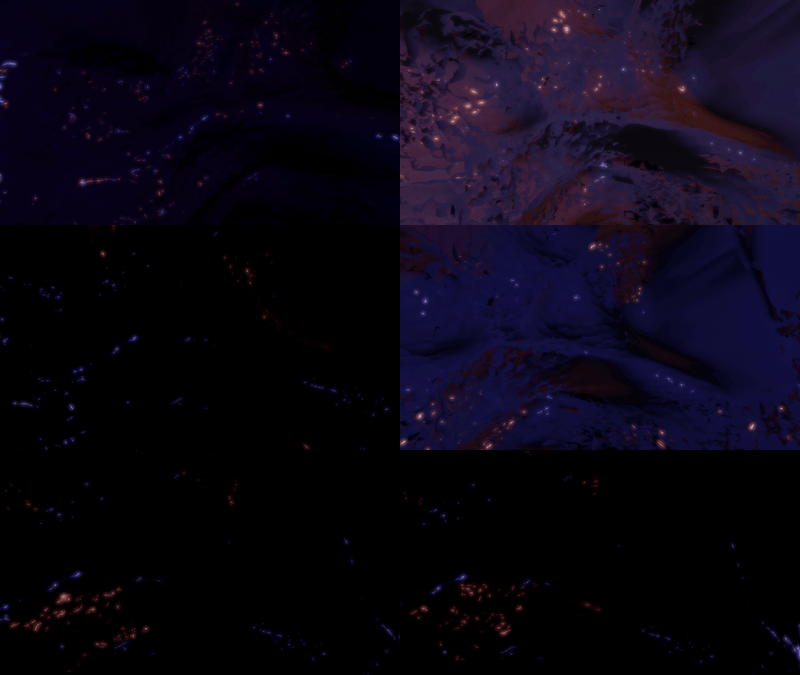
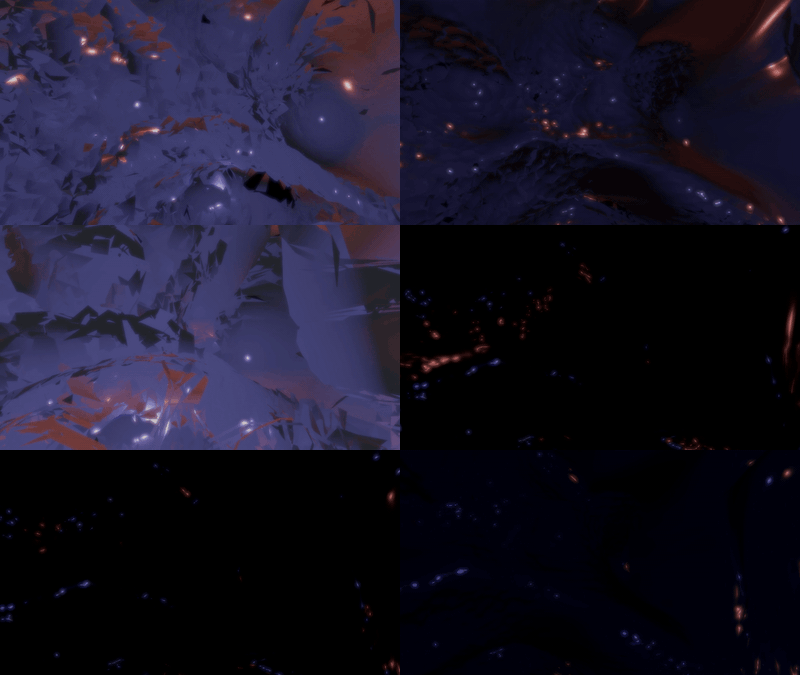
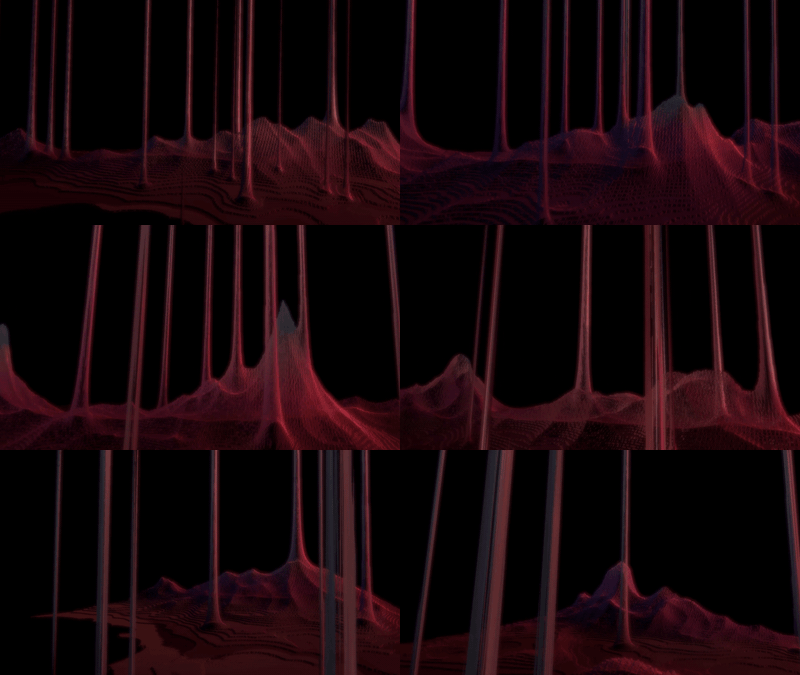
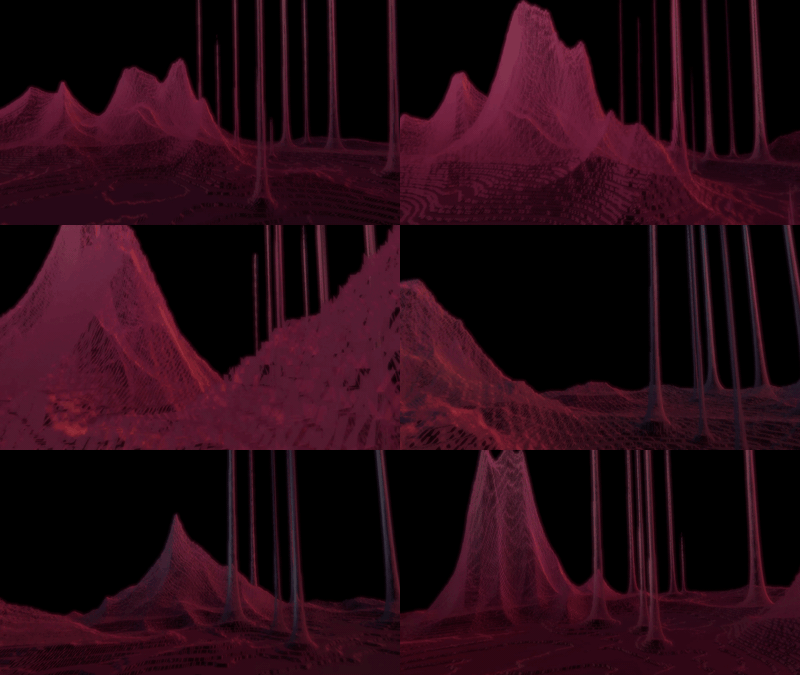
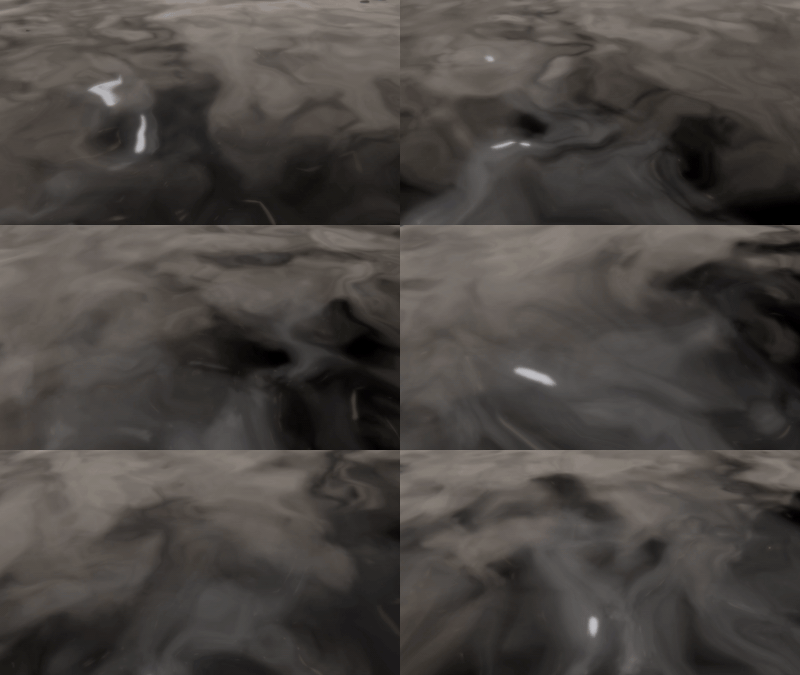
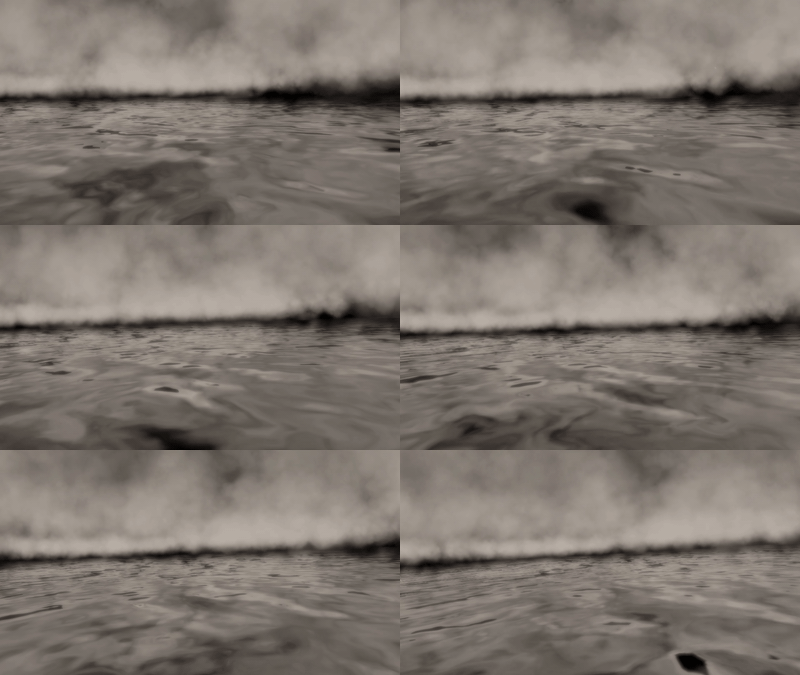

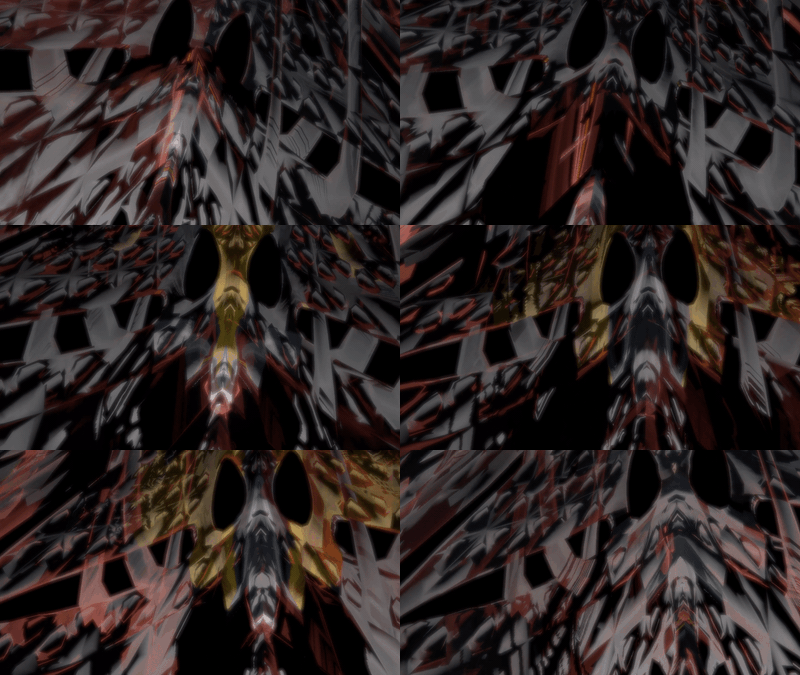
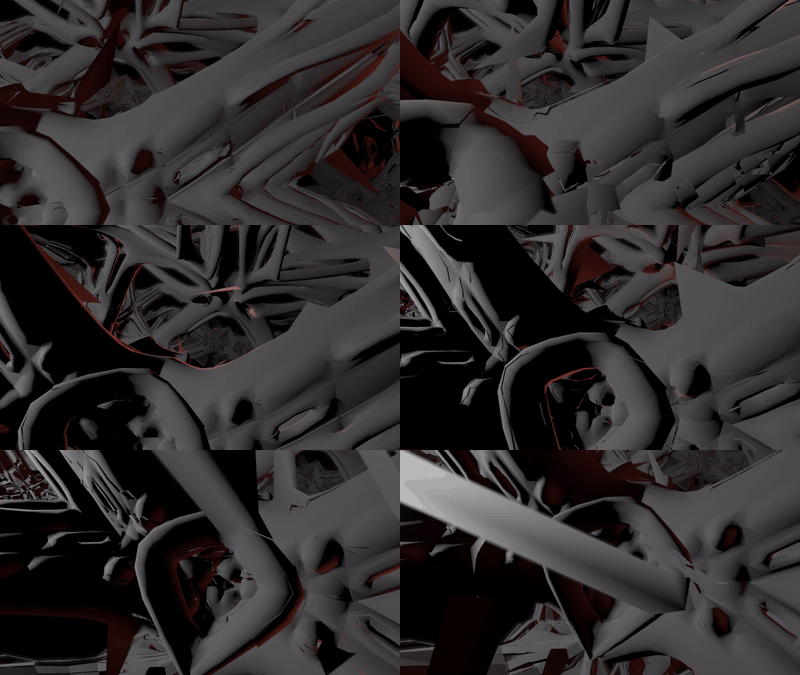
Following the same architecture, I created five scenes: a completely generative scene that translates EEG data into water and smoke without using modelled geometry; a second scene that distorts a plane; and three scenes based on modelled geometry. I created the models for two scenes using Mudbox, while Tobias Klein modelled the third in 3ds Max.