Projects
Artworks, installations, performances and computational systems.
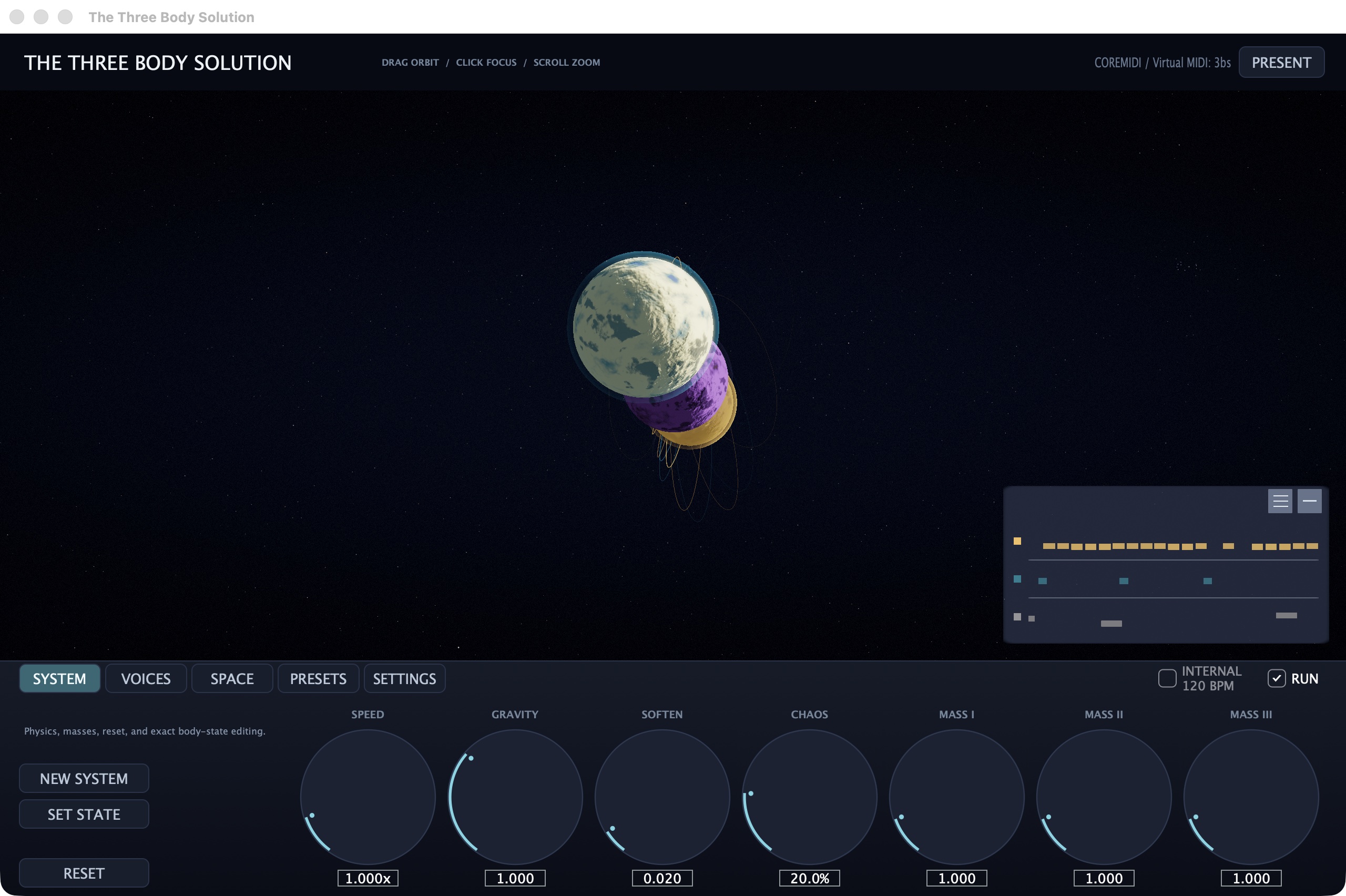
The Three Body Solution
Generative MIDI instrument and simulated planetary artwork
The Three Body Solution turns the simulated gravitational motion of three bodies into musical control messages (MIDI). Distances, velocities, phases and crossings between three bodies determine pitch, when notes begin, how strongly they are played and how long they last across three configurable musical voices.
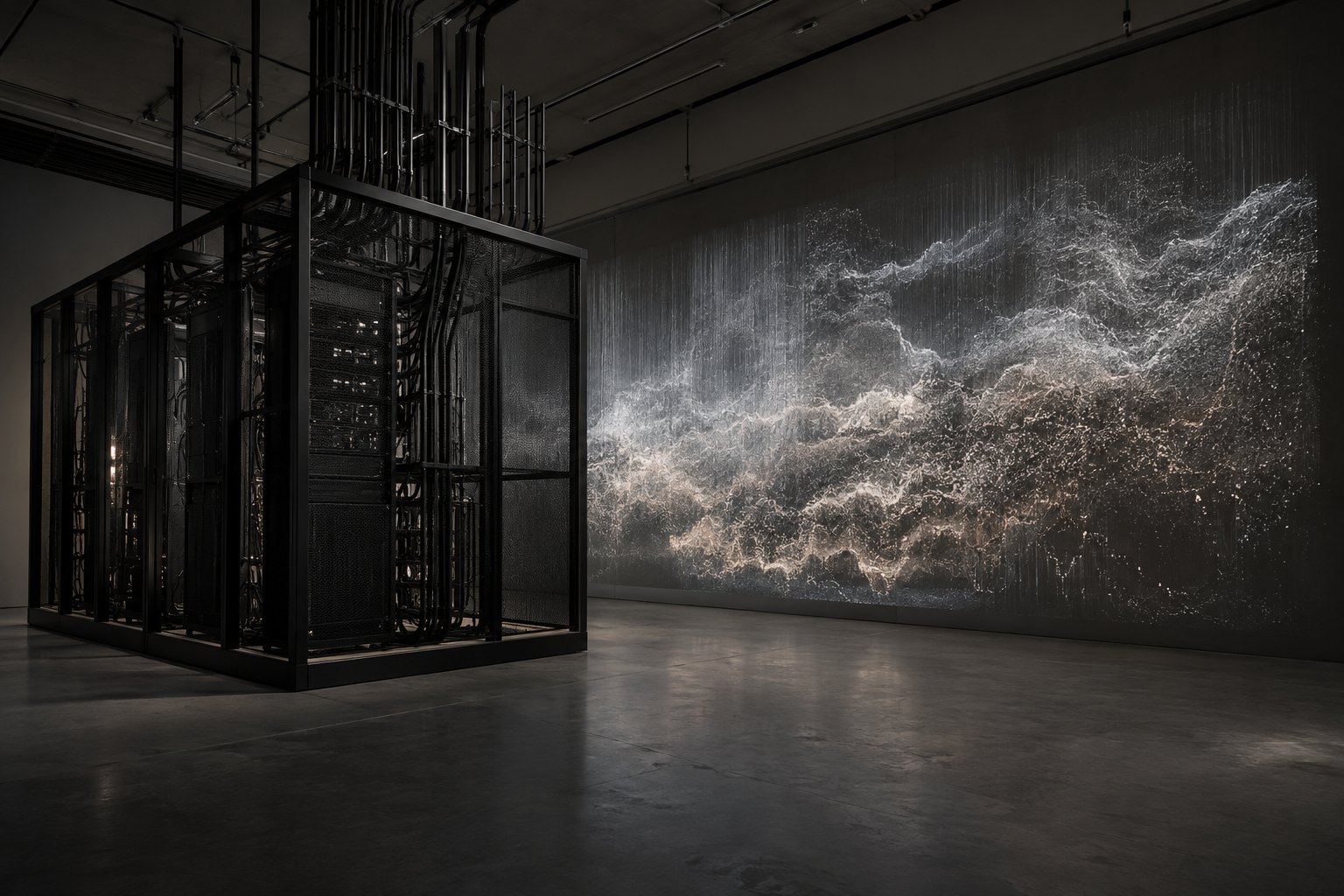
YOU DO NOT CONTROL THIS MACHINE
Networked computing installation and institutional collaboration
YOU DO NOT CONTROL THIS MACHINE asks an institution to lend computing power while surrendering a specific authority over its use. Someone outside the institution requests a quantity of computing resources, and an available machine commits those resources before receiving the encrypted program it will run. The requester receives the useful result; the institution retains the machine, the responsibility for operating it, and a visible residue drawn from traces of the computation that have been reduced to limit what they reveal.
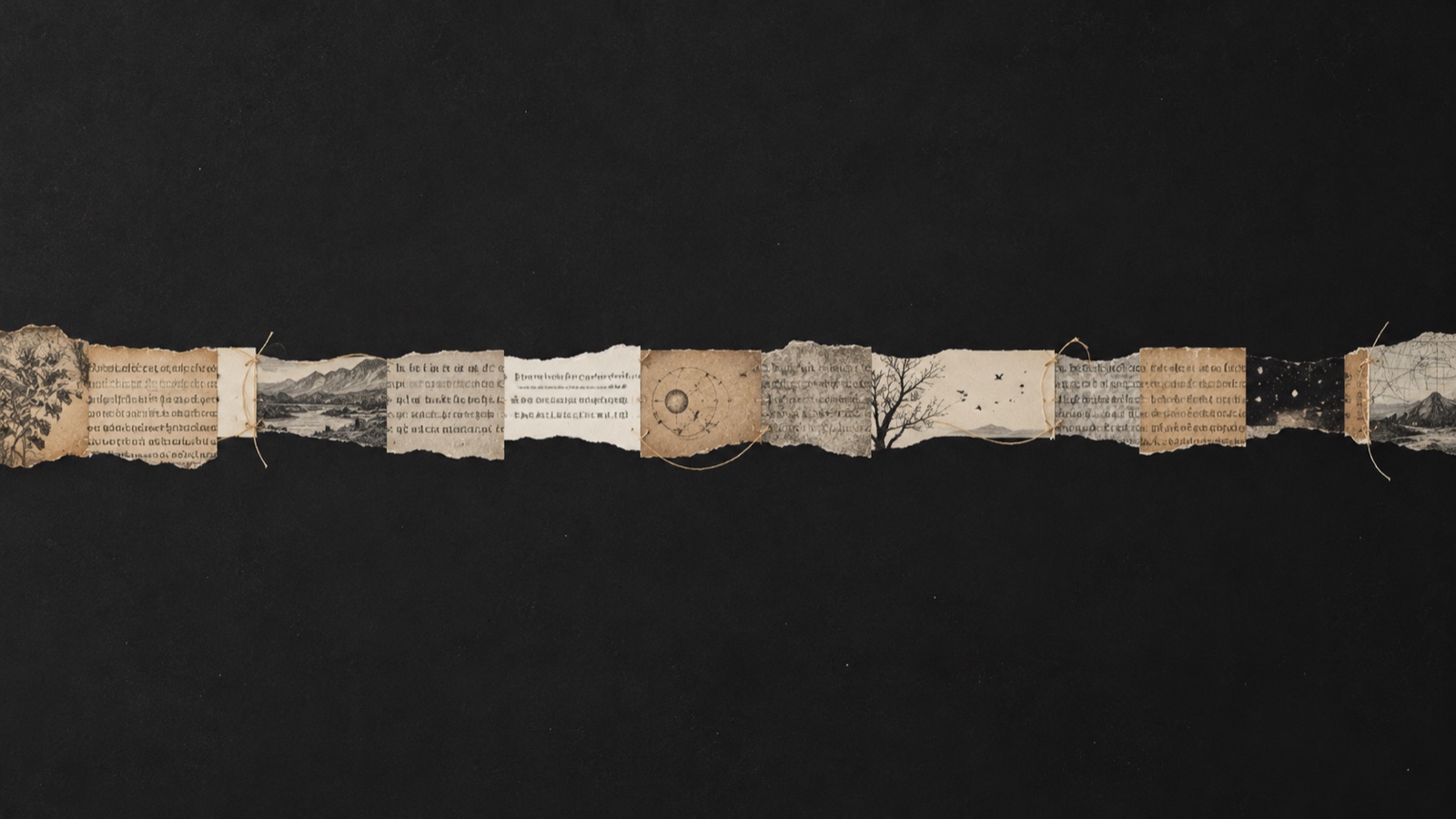
Computational Cadavre Exquis
Browser-based generative text artwork
Computational Cadavre Exquis constructs an exquisite corpse from found sentences. Starting with a chosen sentence, the software locates a source containing it, appends the next sentence, and then searches for that new sentence in a different source. Each assembled passage appears continuous while moving between distinct authored texts.
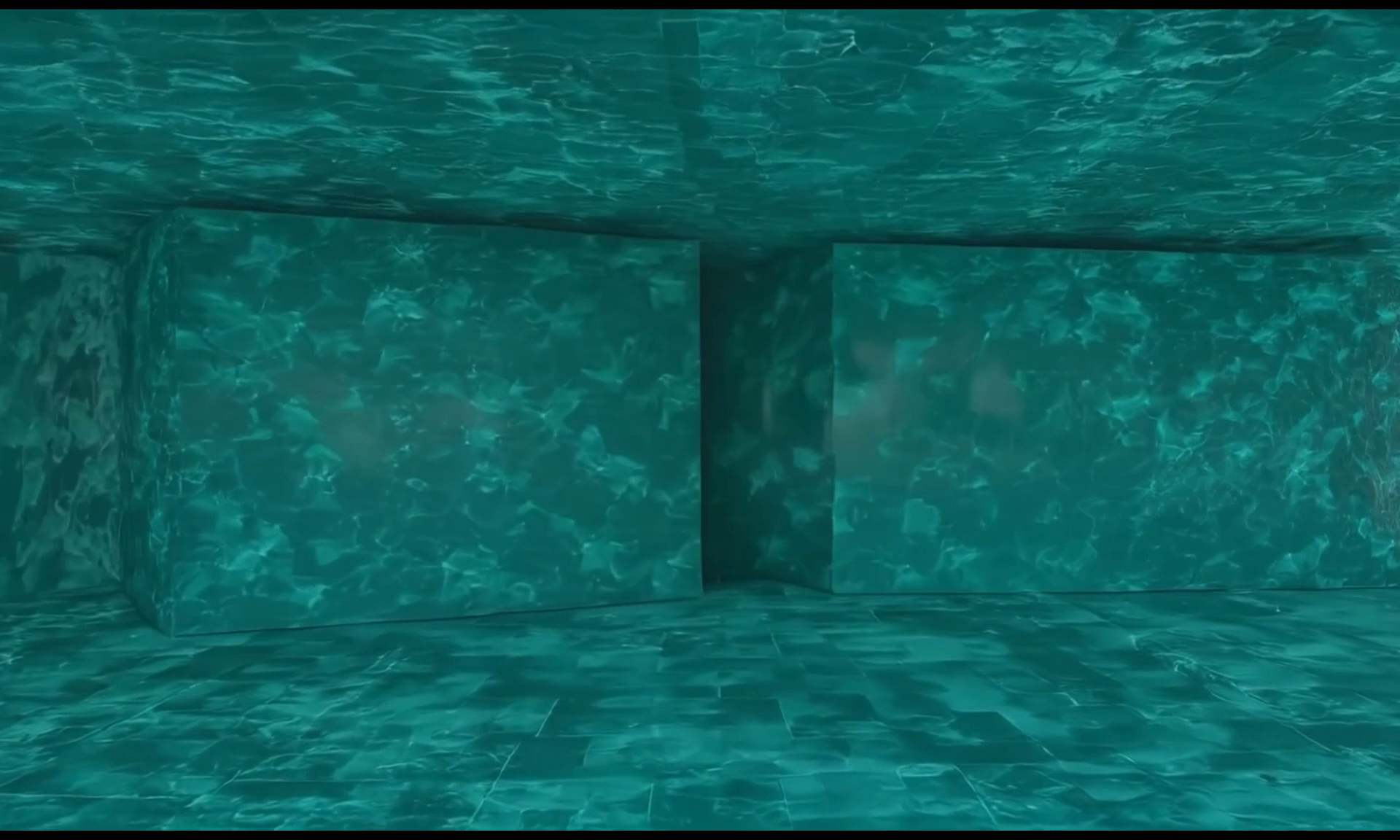
Controlled Permeability
Generative moving image; site-specific display
Controlled Permeability is a generative moving-image work built around photorealism without physical realism. Surfaces, objects, and volumes retain coherent light, scale, and geometry while selectively exchanging properties across biological, mineral, synthetic, and designed matter. A polished shell may become soft or porous; a membrane may acquire mineral density; a pore may open into an architectural chamber; an object may become an environment and then return to object scale.
Memoriae Urbis
Moving image; generative image systems
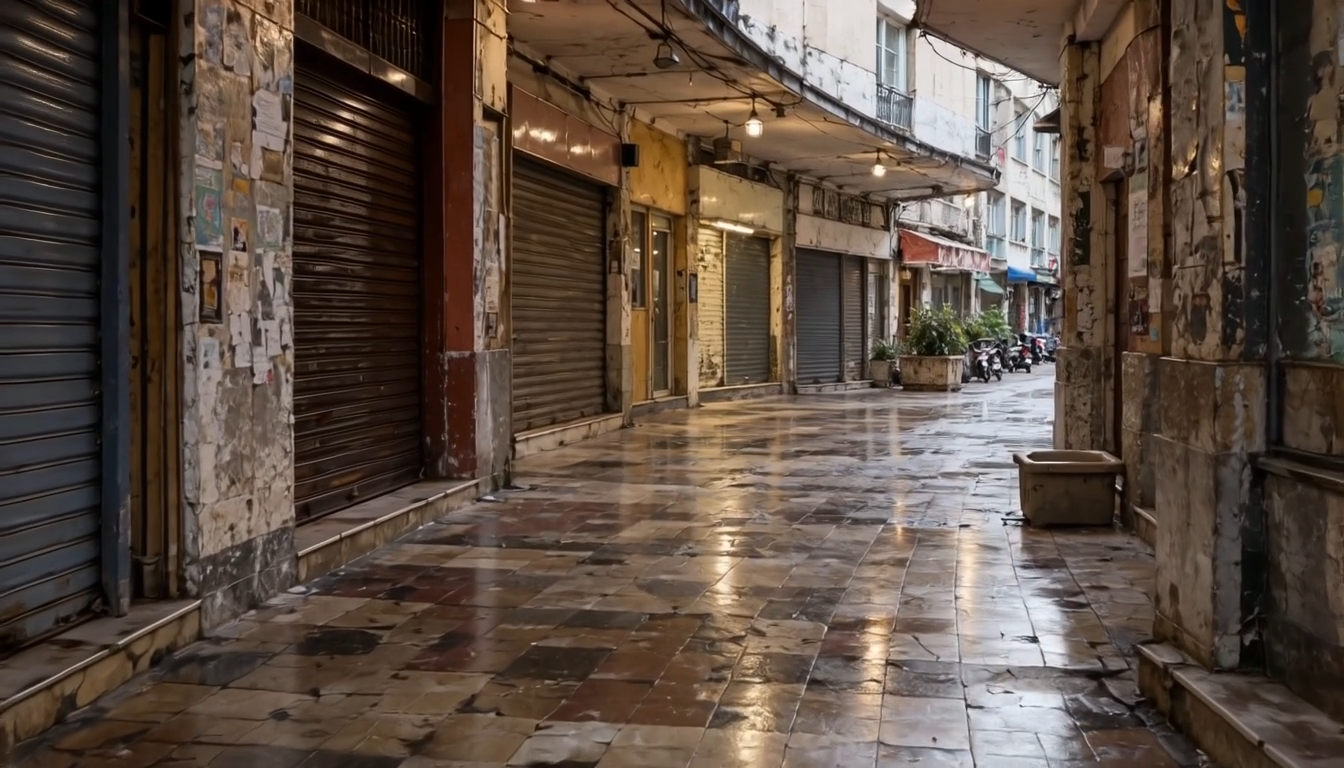
Memoriae Urbis (Memories of the City) is a generative moving-image work in which an ordinary urban present appears saturated with inherited memories. Its streets display evidence of duration, repair, regulation, adaptation, use, weathering, and growth, although no coherent historical process can explain how those signs accumulated together.
Musifold
Interactive browser tool for musical patterns and pad layouts
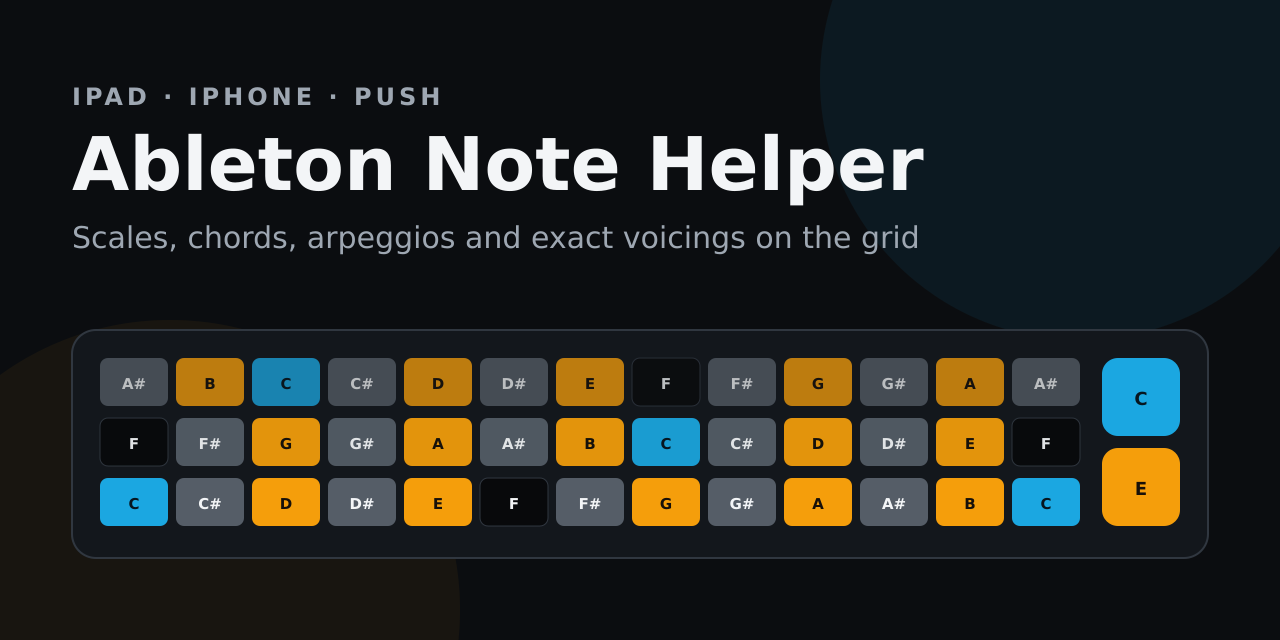
Musifold is a browser-based tool for exploring how the same musical structures appear on different instrument layouts. It presents iPad, iPhone and Ableton Push-style layouts alongside scales, modes, chords, arpeggios, different arrangements of chord tones and jazz phrases.
The National Average
Generative system; moving image; software
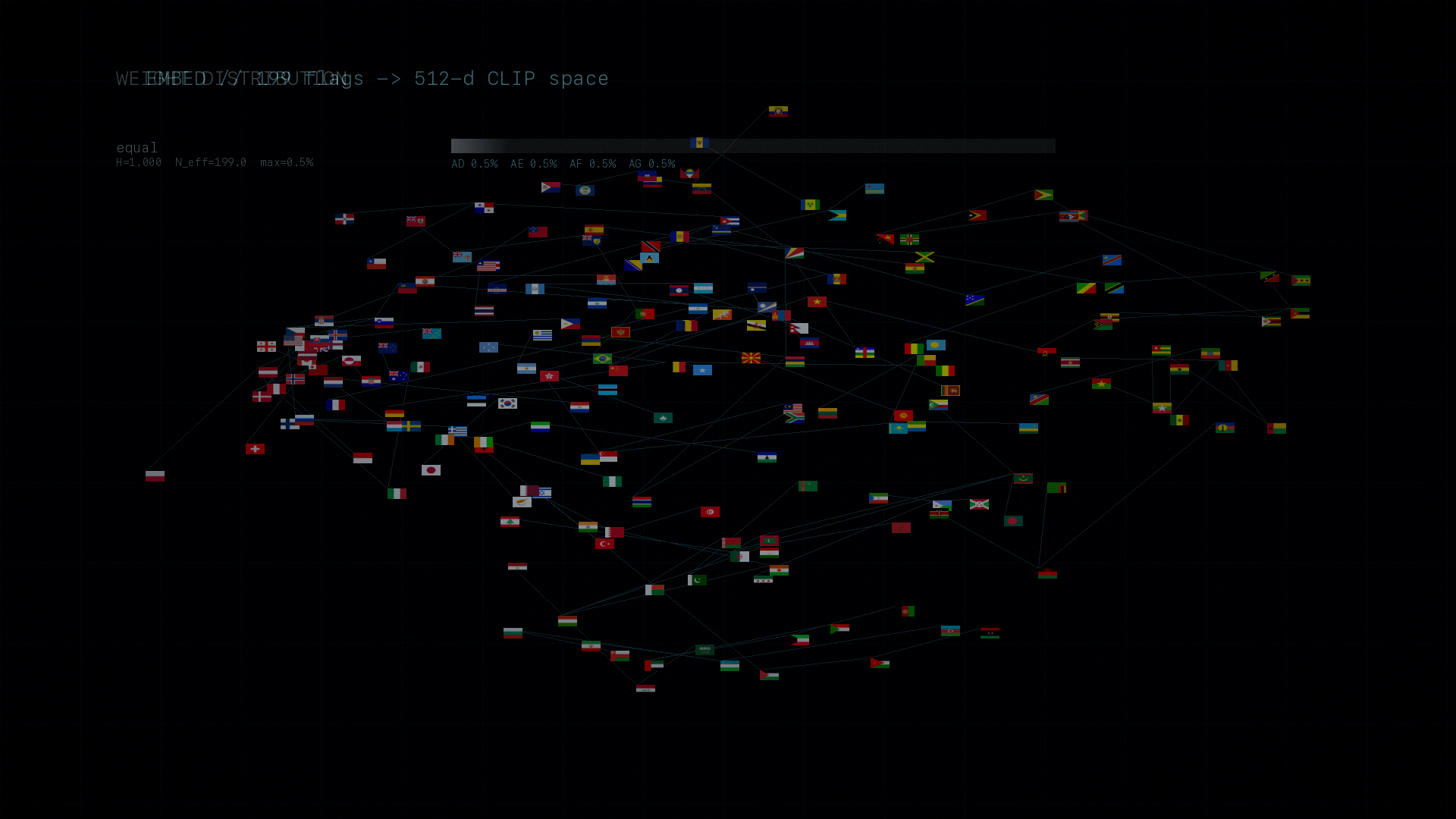
The National Average is a generative artwork and research system about the politics of aggregation. Rather than using an average as an apparently neutral result, it exposes the operations through which an average is produced: what is included, how things are weighted, how values are normalised, and in what representational space they are compared.
This Shader Does Not Exist
Generative browser artwork
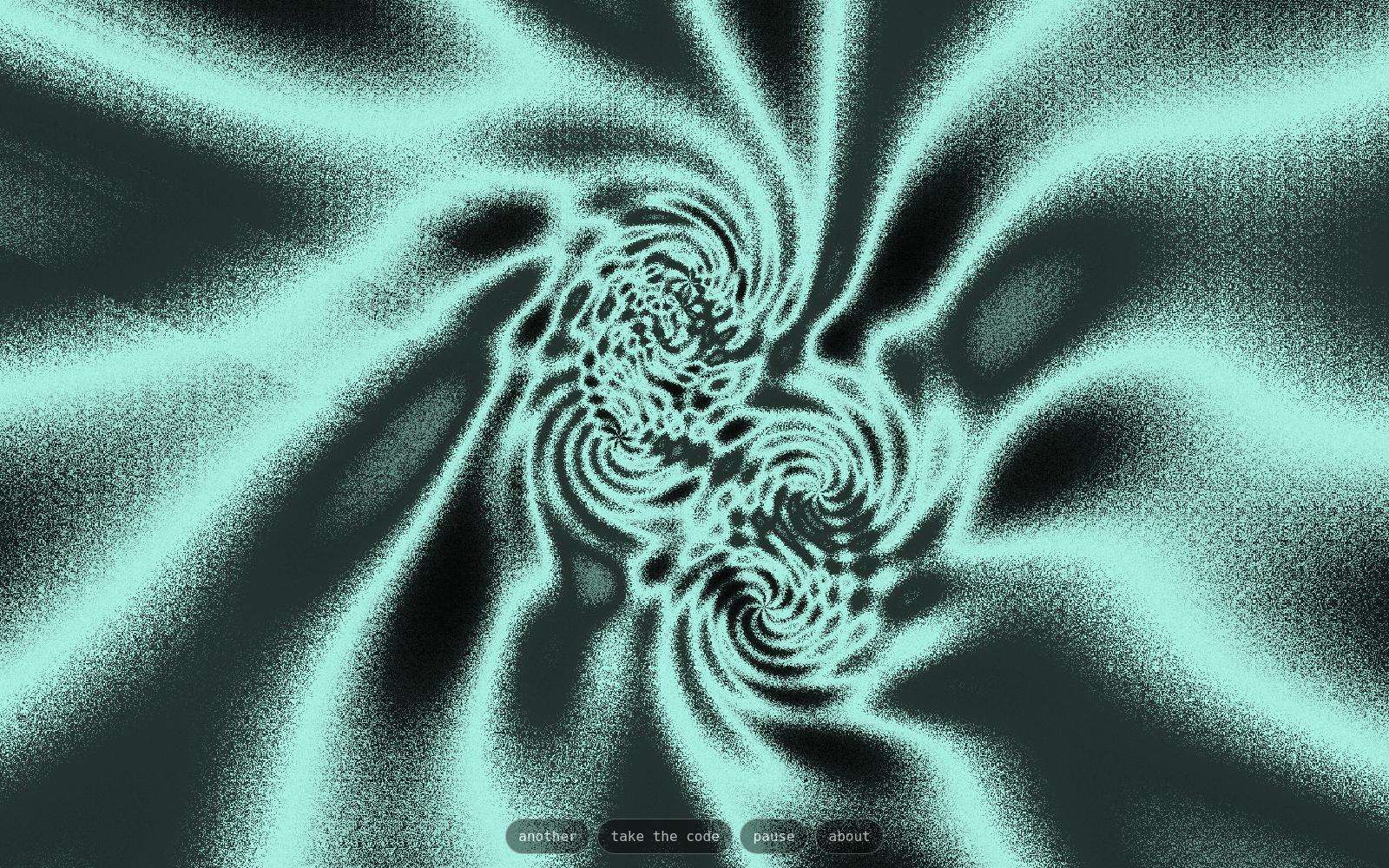
This Shader Does Not Exist is a browser artwork that presents one animated image at a time. Each image is produced by a shader, a small program that runs on the graphics processor. The visitor may remain with it, pause its movement, relinquish it through another, or take the code so that its executable form can continue elsewhere.
LA MASA
Short film; generative AI video
LA MASA is a short film about a fictional Mexican Space Agency, nicknamed “La MASA”, that in 1960 was able to send an astronaut to a remote planet using a combination of traditional Mesoamerican magic and experimental technology.
Abandoned Future
Generative digital prints
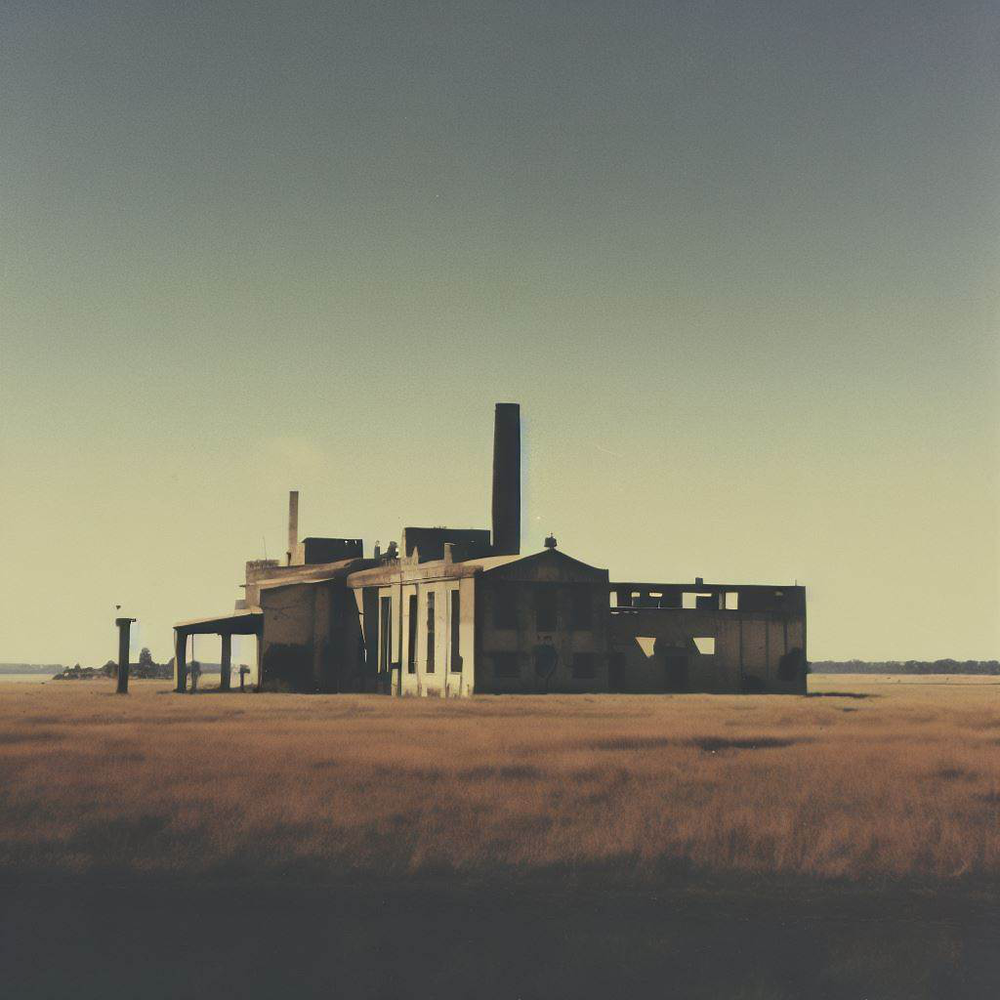
Abandoned Future (2025) consists of six large-format digital prints of fictional abandoned factories. Generated images of crumbling concrete, rusting steel and overgrown vegetation draw on Uruguay’s industrial architecture, placing the promise of modernisation beside the material appearance of its abandonment.
Abandoned Fictions
Digital image
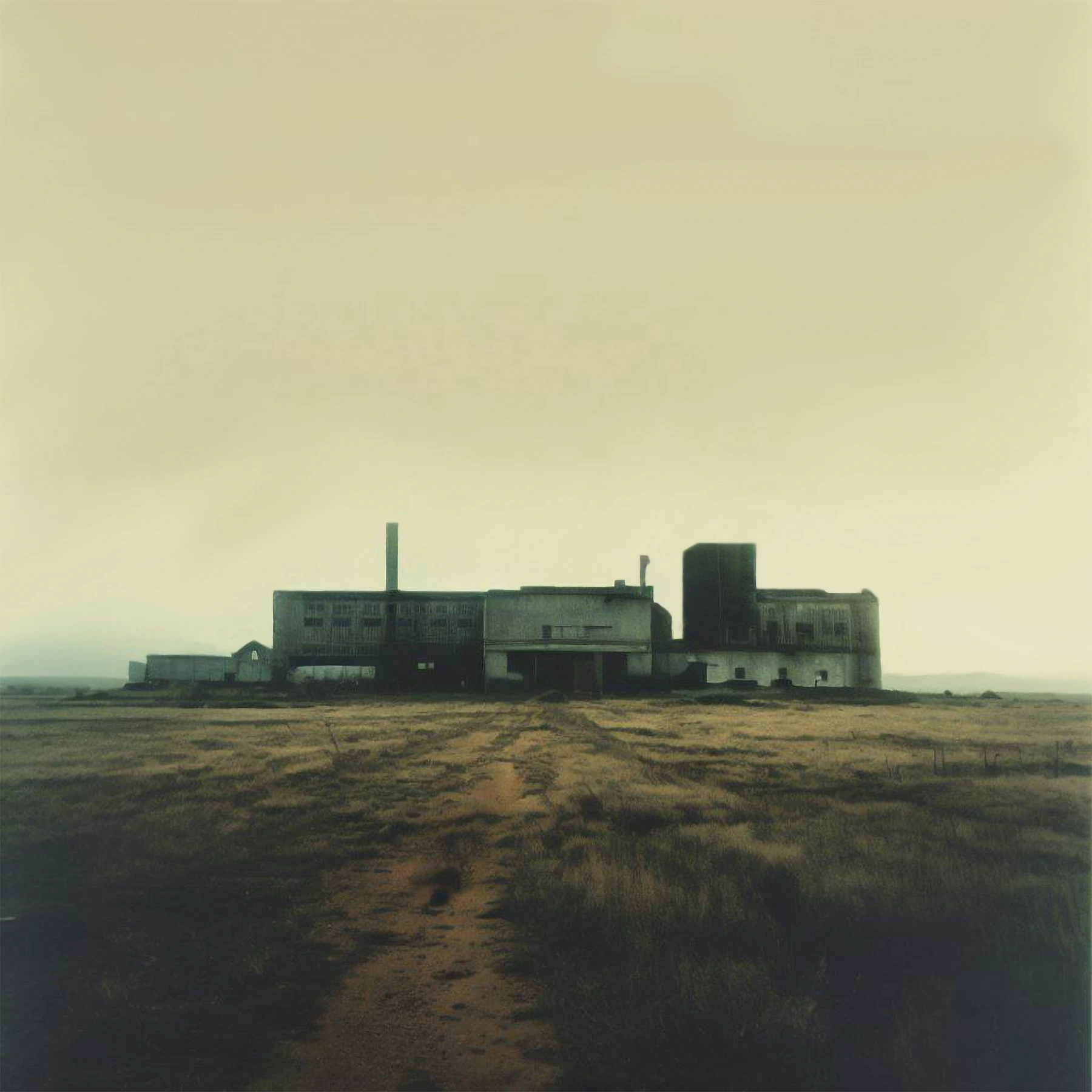
Abandoned Fictions (2024) reflects on Uruguay’s mid-twentieth-century industrialisation.

Ave Imperator
Generative video
Ave Imperator places selected Palestinian accounts of bombardment, displacement, imprisonment and everyday life within altered recordings of presidents and prime ministers. Podiums, flags, microphones and the gestures of official appearances remain visible, while the speech they seem to authorise comes from people whose vulnerability is usually represented at a distance from political power.
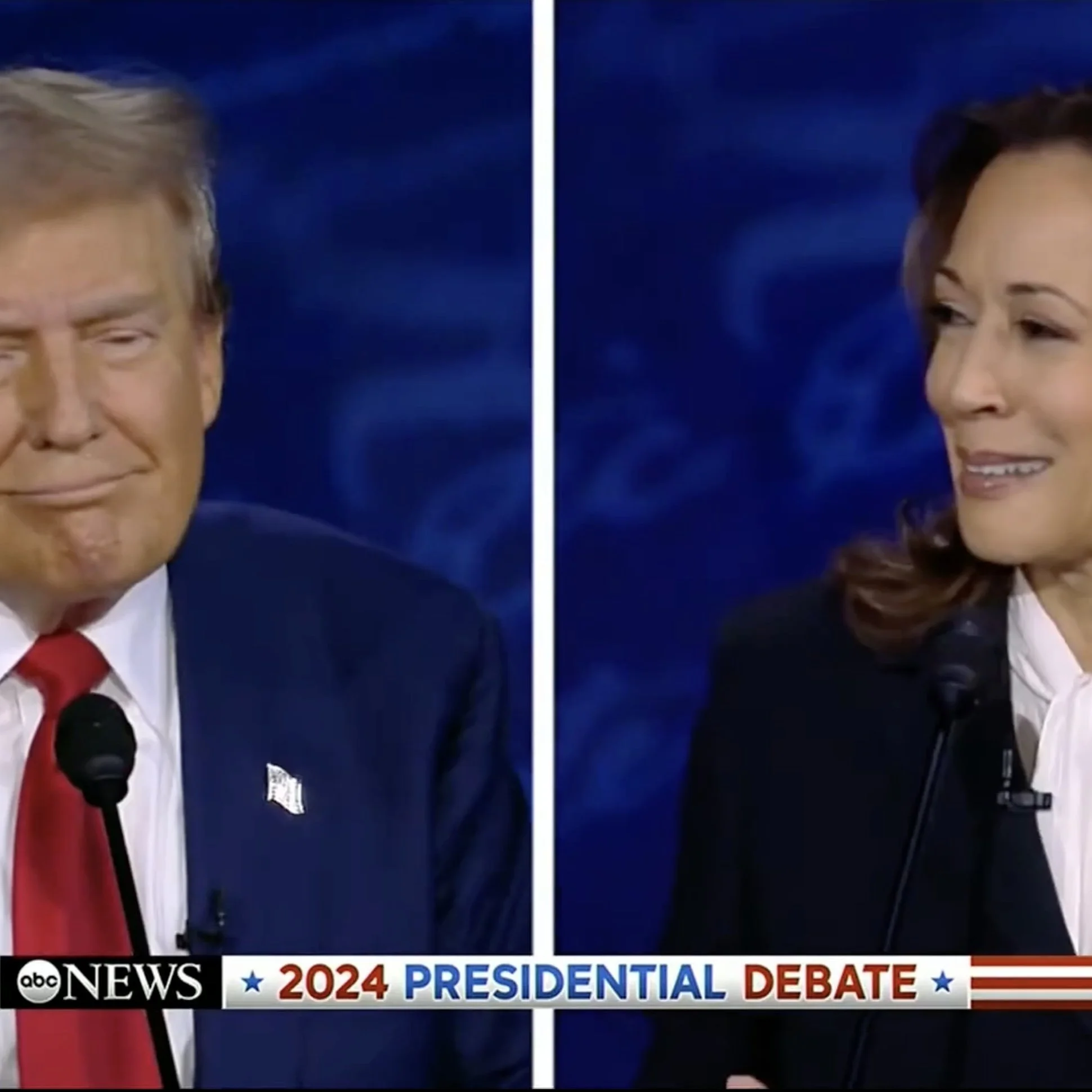
The cruel continuity of American foreign policy as shown in the Harris–Trump debate
Algorithmically edited video
(or the Harris–Trump debate as seen from the third world)
Hommage Numérique
Experimental short film; generative AI
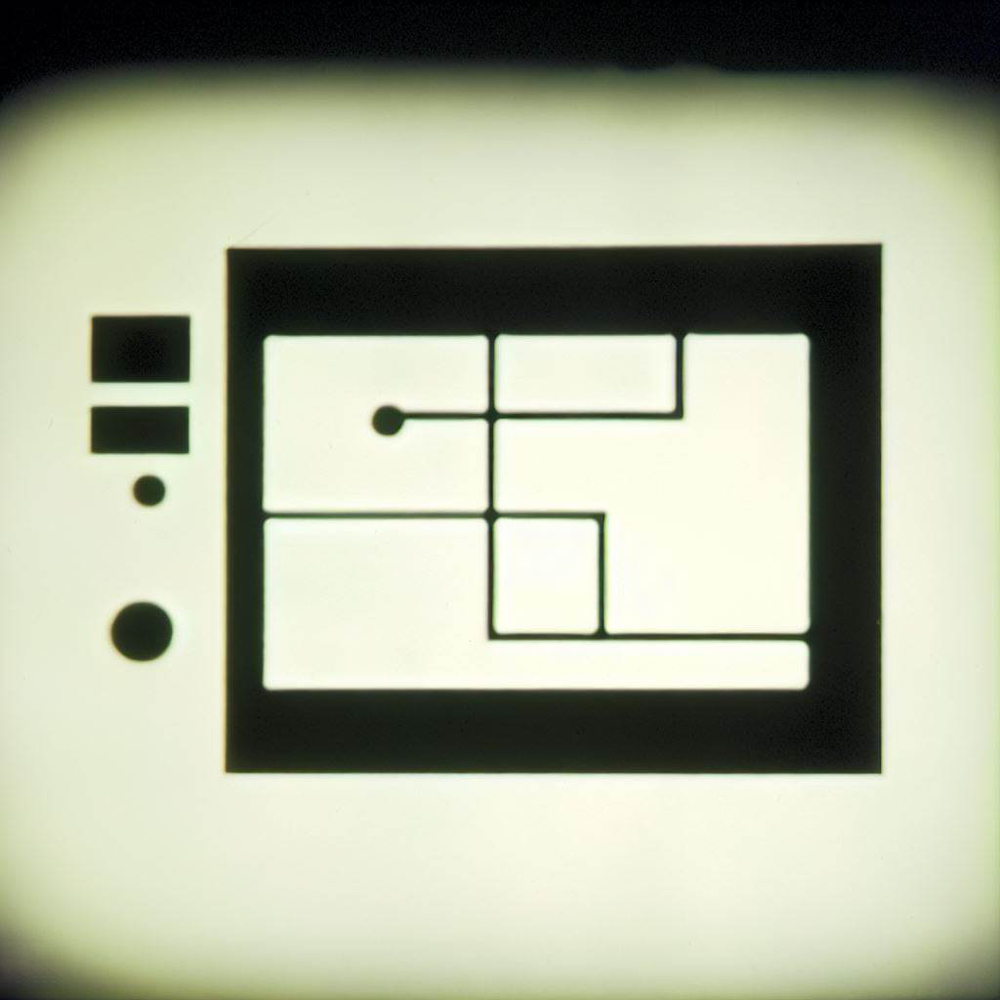
Hommage Numérique is an experimental short film that draws inspiration from the daring aesthetics of early 20th-century avant-garde filmmakers such as Marcel Duchamp, Dudley Murphy, Walter Ruttmann, Viking Eggeling, Len Lye, and especially Hans Richter.
Montevideo, 1983
Short film; generative moving image
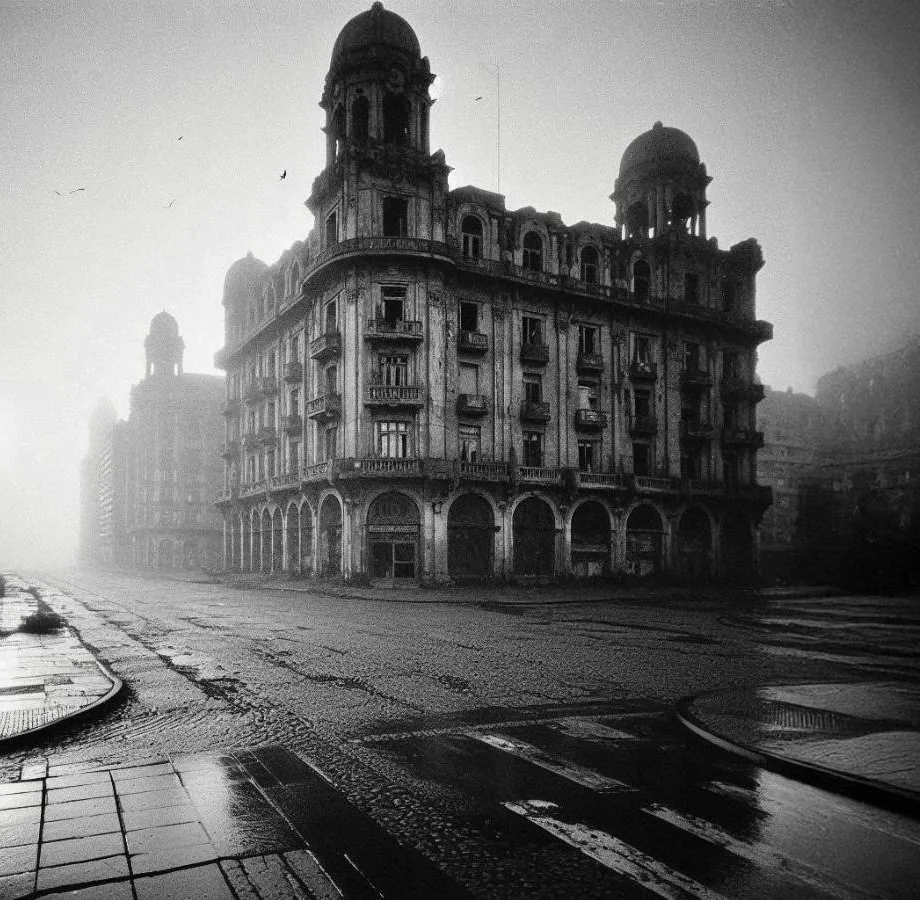
In 1983 I was six years old and everything was quite terrible.
Be Water
Interactive kinetic installation
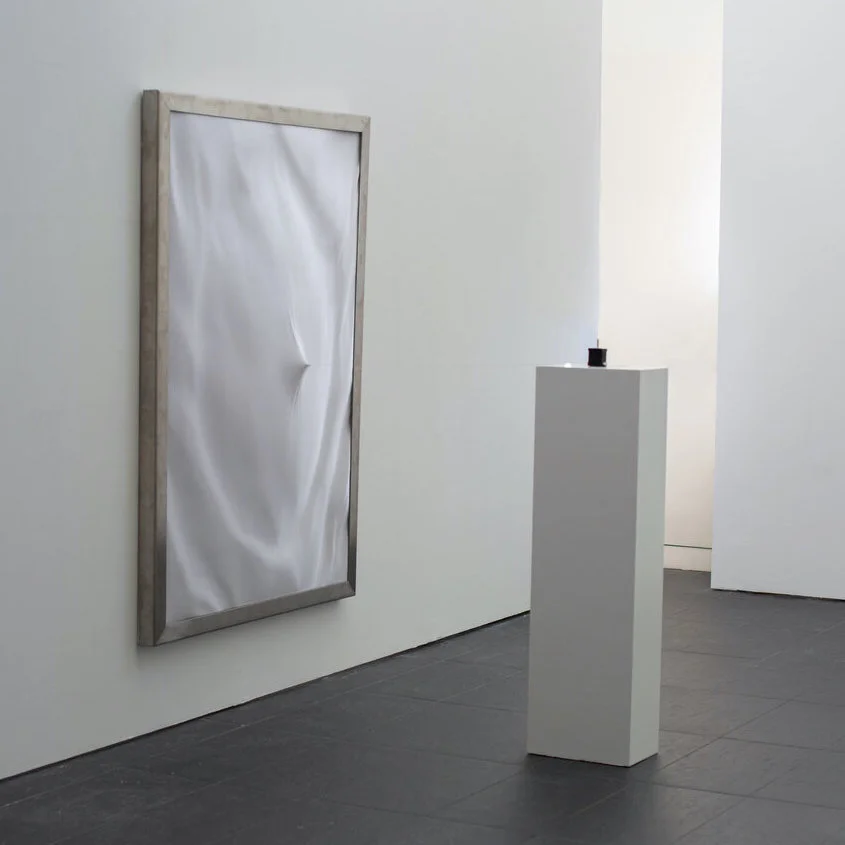
Be Water is an interactive installation that creates fluid-like movements in a flexible screen that is pulled by a motor. The installation uses a digital camera and machine learning to track the faces of its visitors to then predict their heart rate by monitoring changes in the skin colour. The frequency and patterns of the pulling combine the detected heart rates; the resulting fluid movements visualise the combined heartbeats of the installation’s visitors.
Brain Portraits
EEG-driven audiovisual work
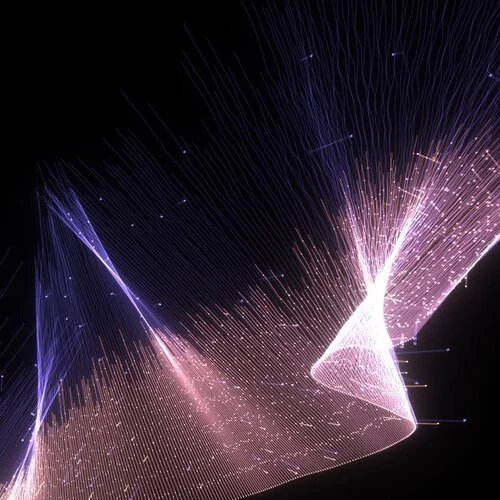
Using a commercially available, low-fidelity electroencephalography (EEG) sensor, Muse, I captured the electrical activity of my brain while performing different tasks. The resulting video, Brain Portraits, showcases several of these dynamic, abstract, snapshots of my brain working.
DOOR and BOX
Interactive audiovisual installations
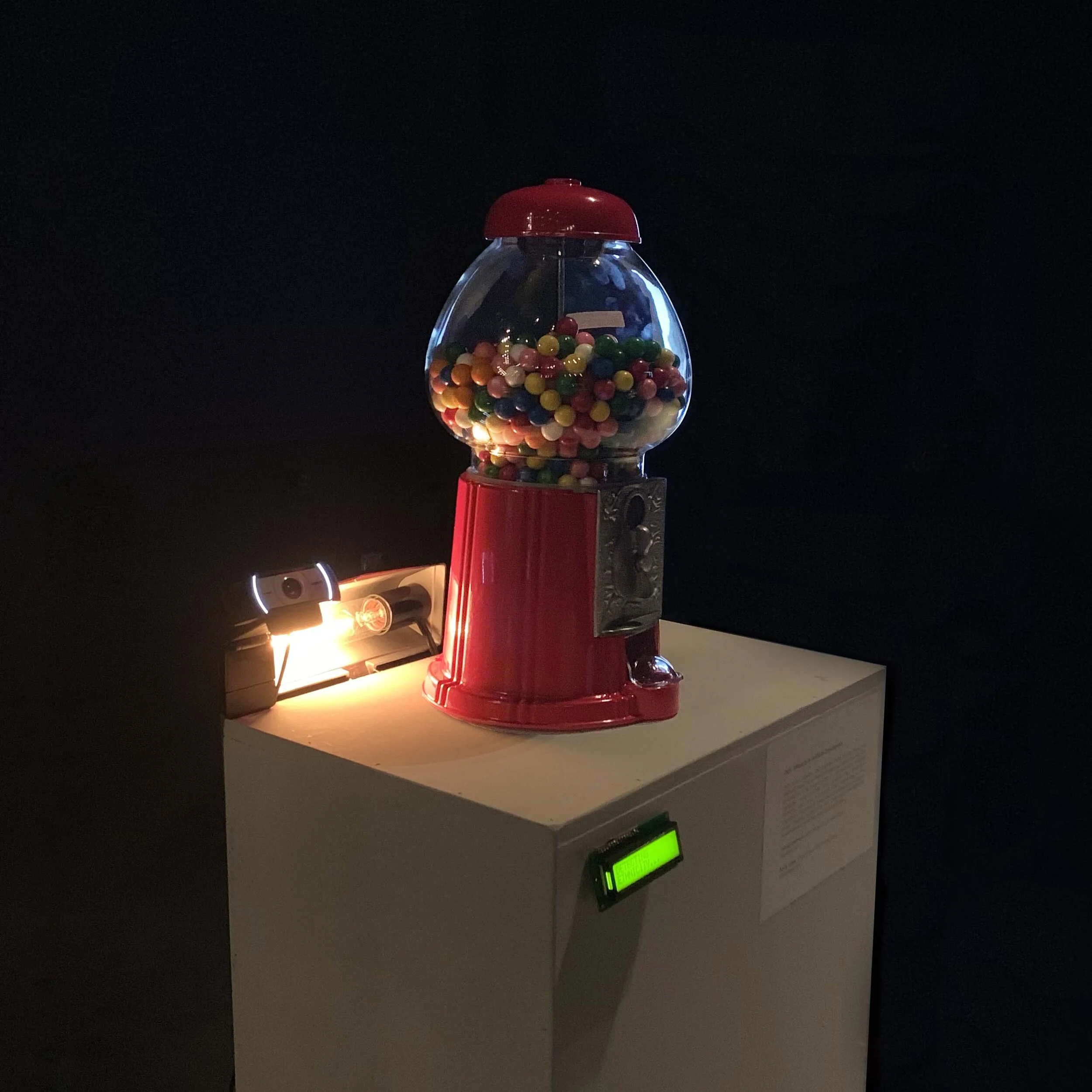
DOOR and BOX are two artworks of an ongoing series of works aiming to research and expose some of the social and political impact of artificial intelligence, computer vision, and automation. These two projects use a computer vision system that predicts the interactor’s ethnicity, and change their behaviour depending on this prediction: the door is only unlocked if its user is white; the gumball machine delivers free candy only if its user is white.
Creative Coding
Generative visual studies
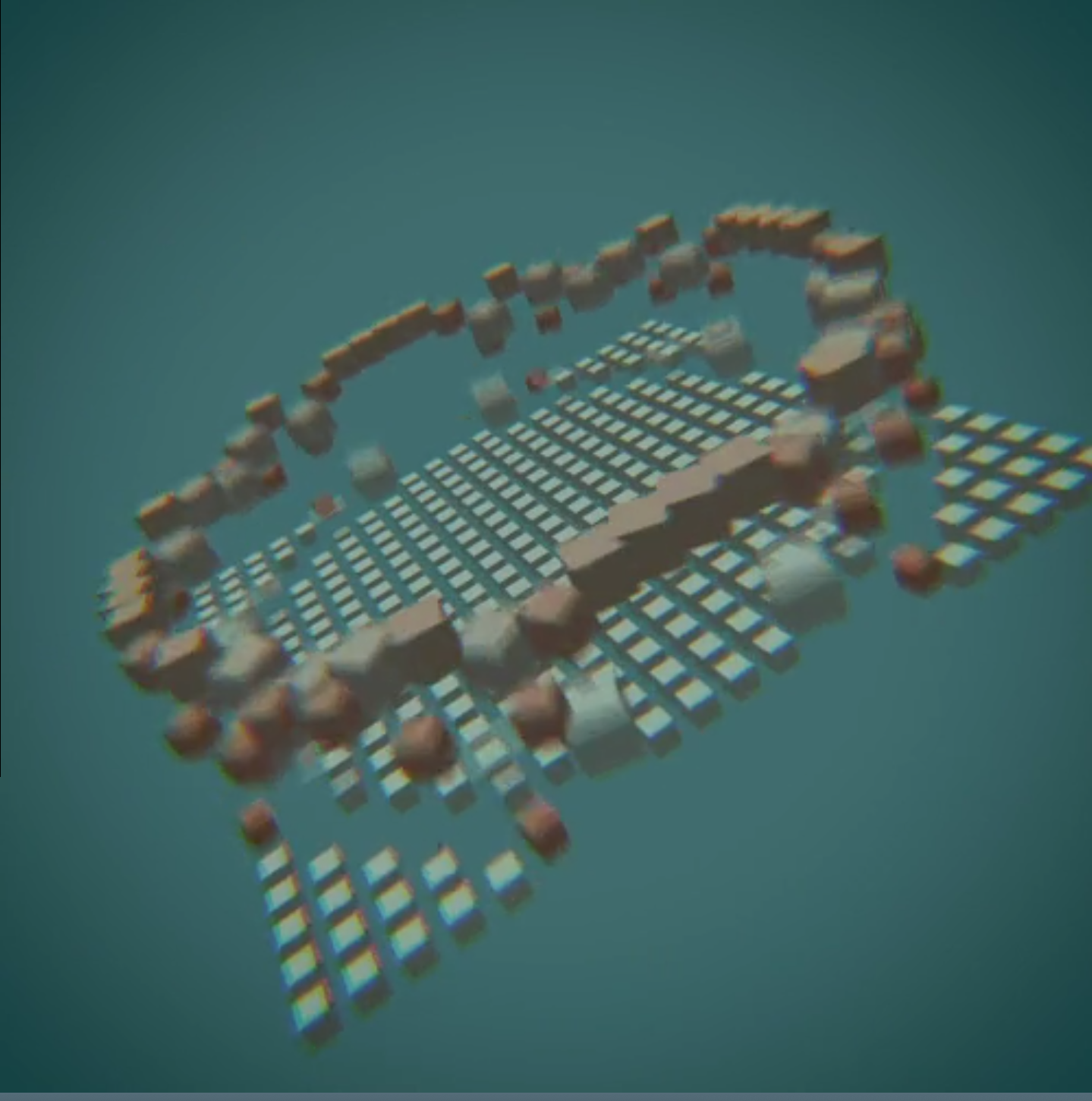
A few little tests and exercises. Most of these were created as examples for my students of the course Mathematics and Art (SM1801) at the School of Creative Media, City University of Hong Kong.
Extraordinary Accident
Virtual-reality artwork
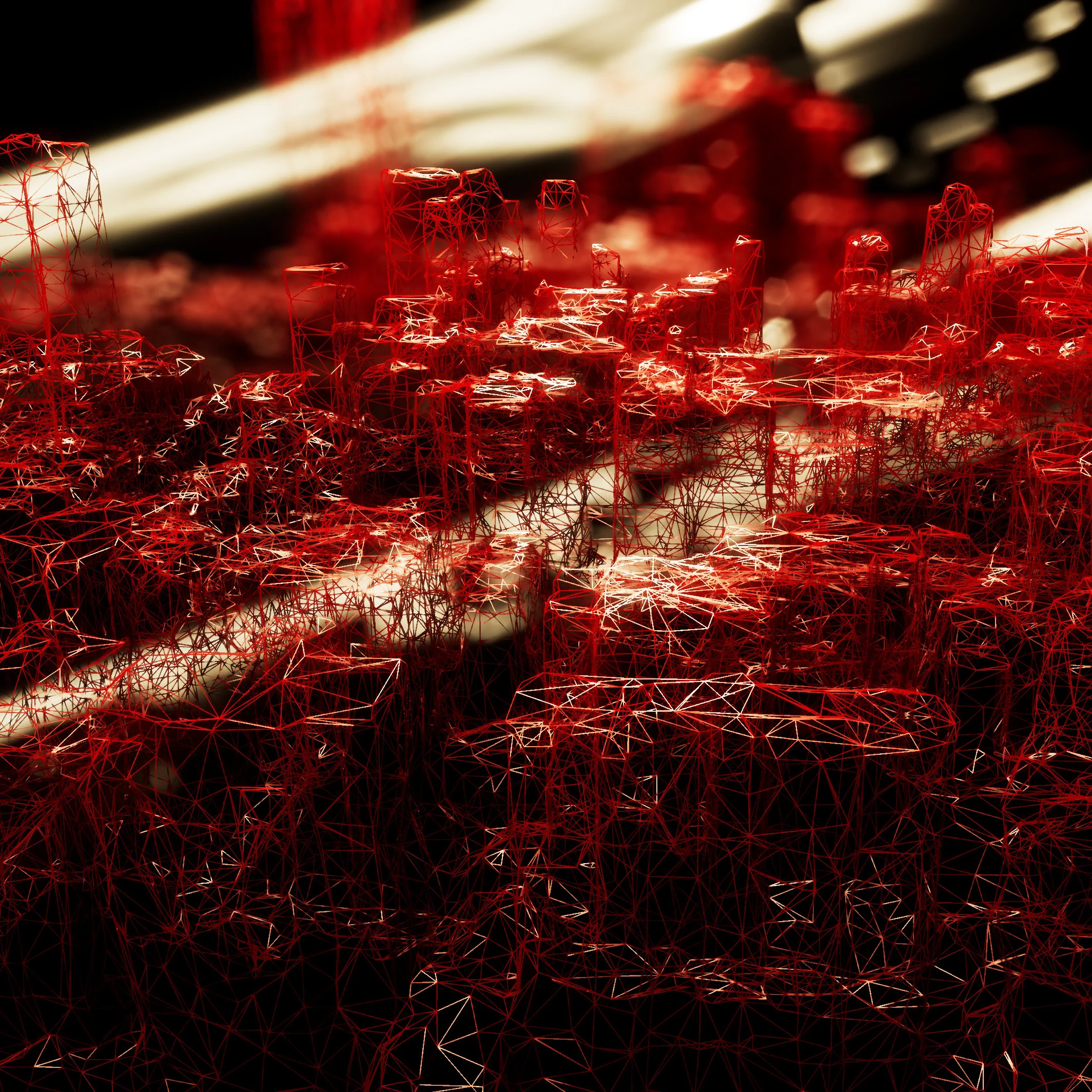
Extraordinary Accident is a virtual reality artwork that reflects on Hong Kong’s urban experience, focusing on the differences and similarities that different perceptual scales may offer.
Memoirs of the Blind
Interactive installation; computer vision
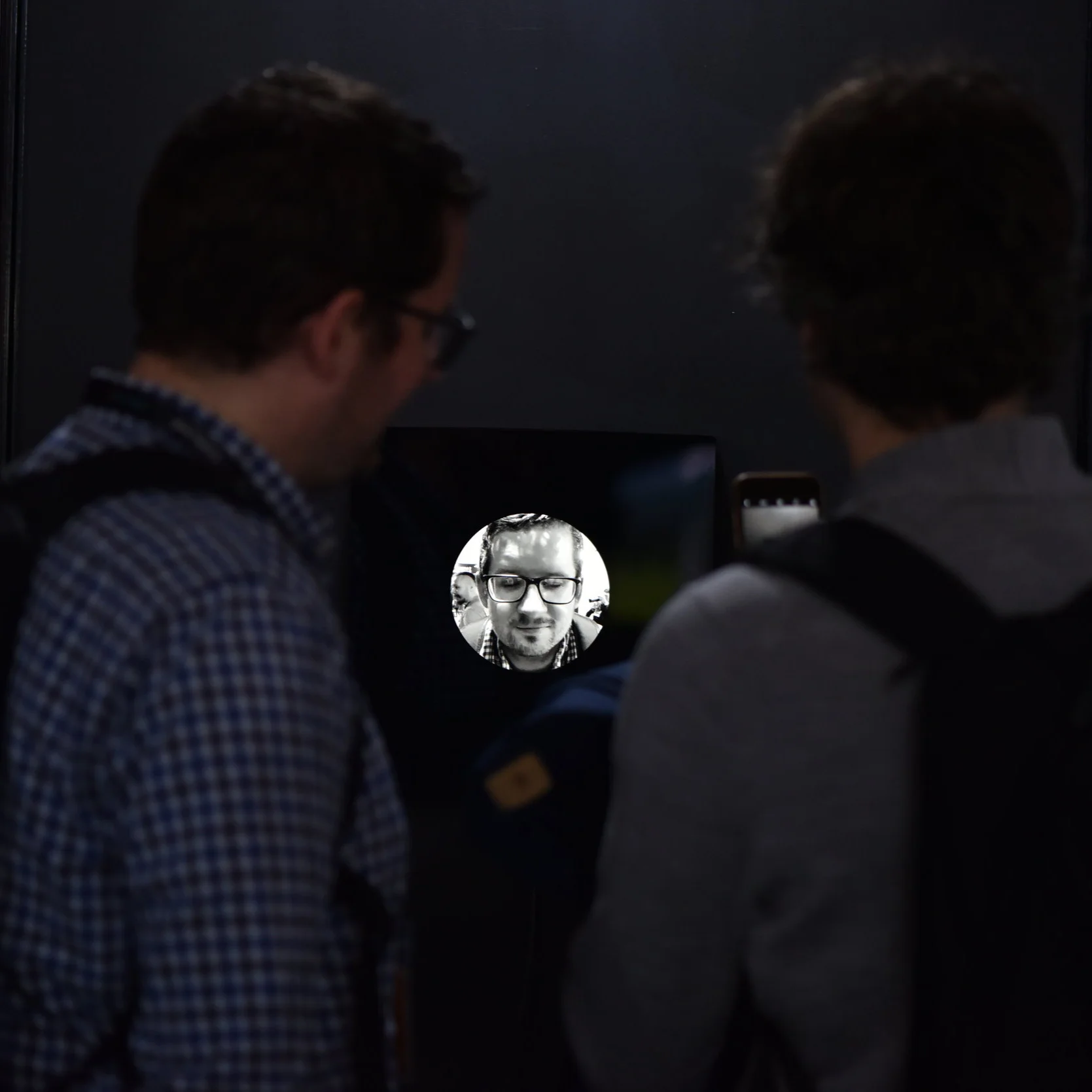
Memoirs of the Blind is an interactive installation consisting of a screen showing a black-and-white picture of a face with its eyes closed. This image at first remains still, however, when the interactor blinks, the installation detects it and takes a photo at the exact time of the blinking. Once the new face is obtained, it is processed (cropped, desaturated, and adjusted) and then it substitutes the displayed face.
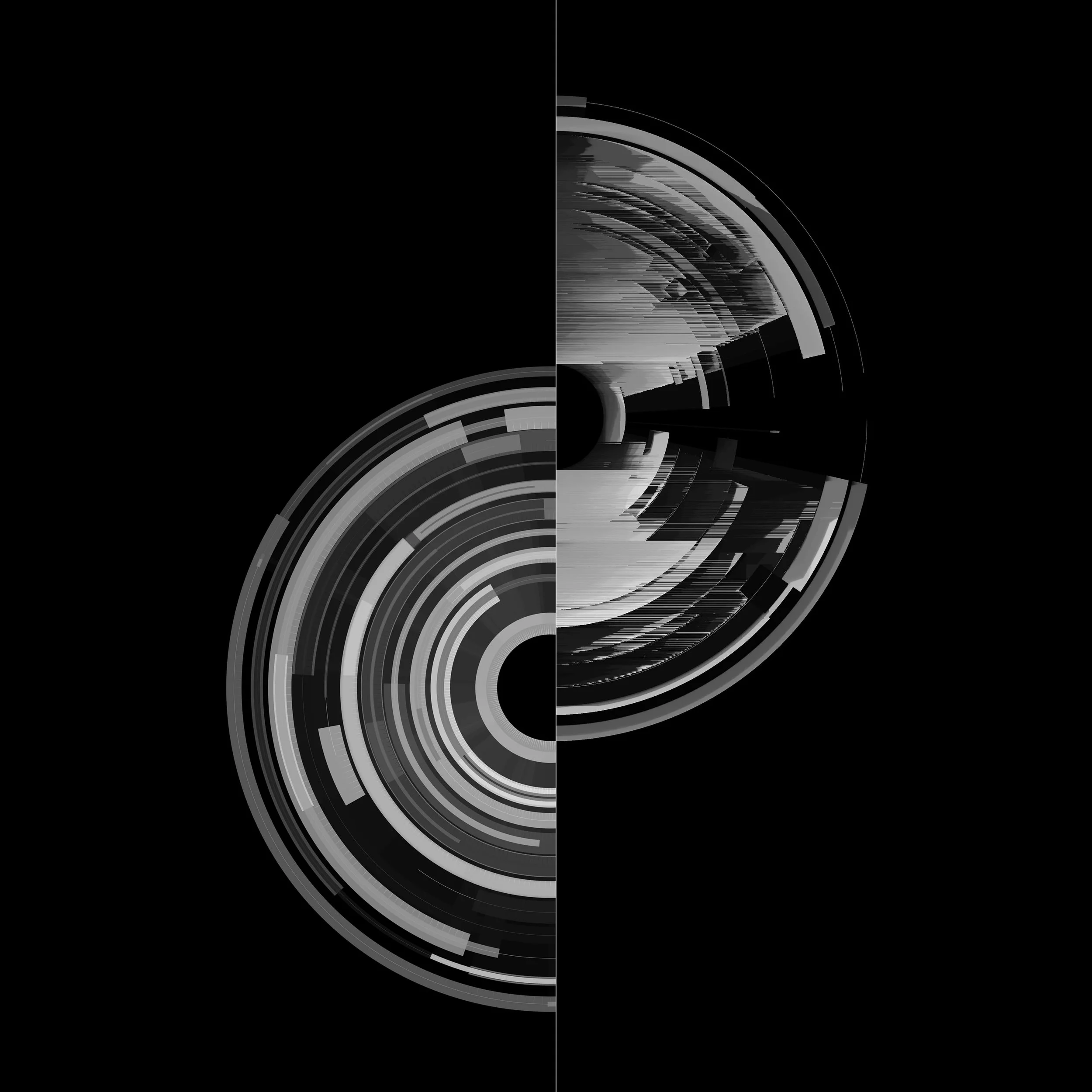
Estudio Generativo #3
Generative print
Generative prints. Created using Processing and Photoshop. (Click to enlarge.)
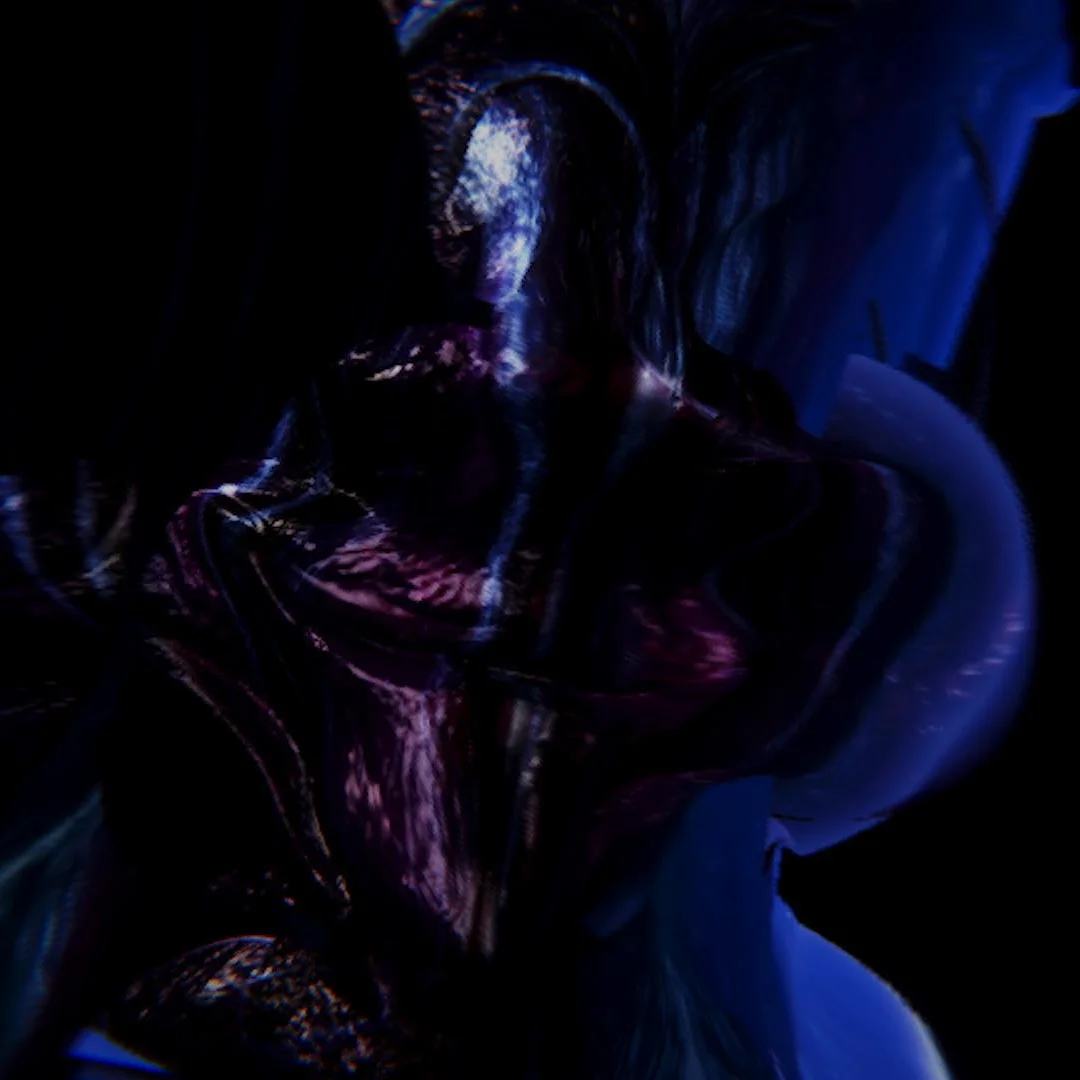
Improvisatio
Computer-generated audiovisual work
An audiovisual journey exploring the tension between composition and improvisation, digital and analogue, abstract and figurative. Made with Unity, Maya, Mudbox, Processing, and Premiere.
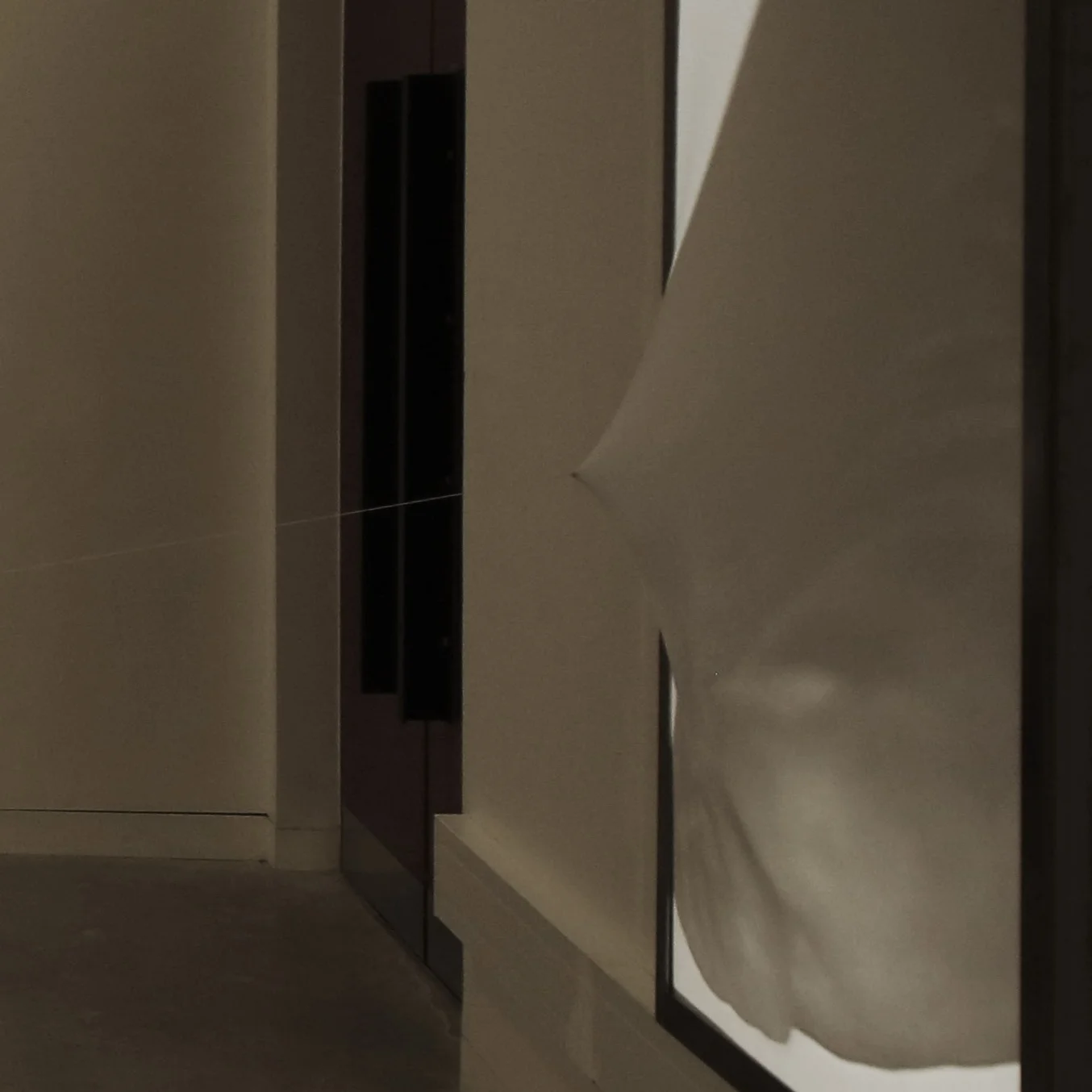
Ekphrasis
Kinetic mixed-media installation
Ekphrasis (elastic screen, servomotor, string, metallic frame, wooden structure, Arduino microcontroller, custom software, projector) is a mixed-media installation consisting of close-up videos of a heavily scarred body projected onto an elastic screen. The screen has one string attached to its centre, which in turn is attached to a stepper motor. The motor pulls the screen in a controlled random pattern, stretching it and letting go, sometimes carefully, sometimes violently. The rectangular screen is framed by a custom metallic frame, which resonates with the black and white projected videos. A wooden structure supports the stepper motor hiding the electronics and the projector in its base.
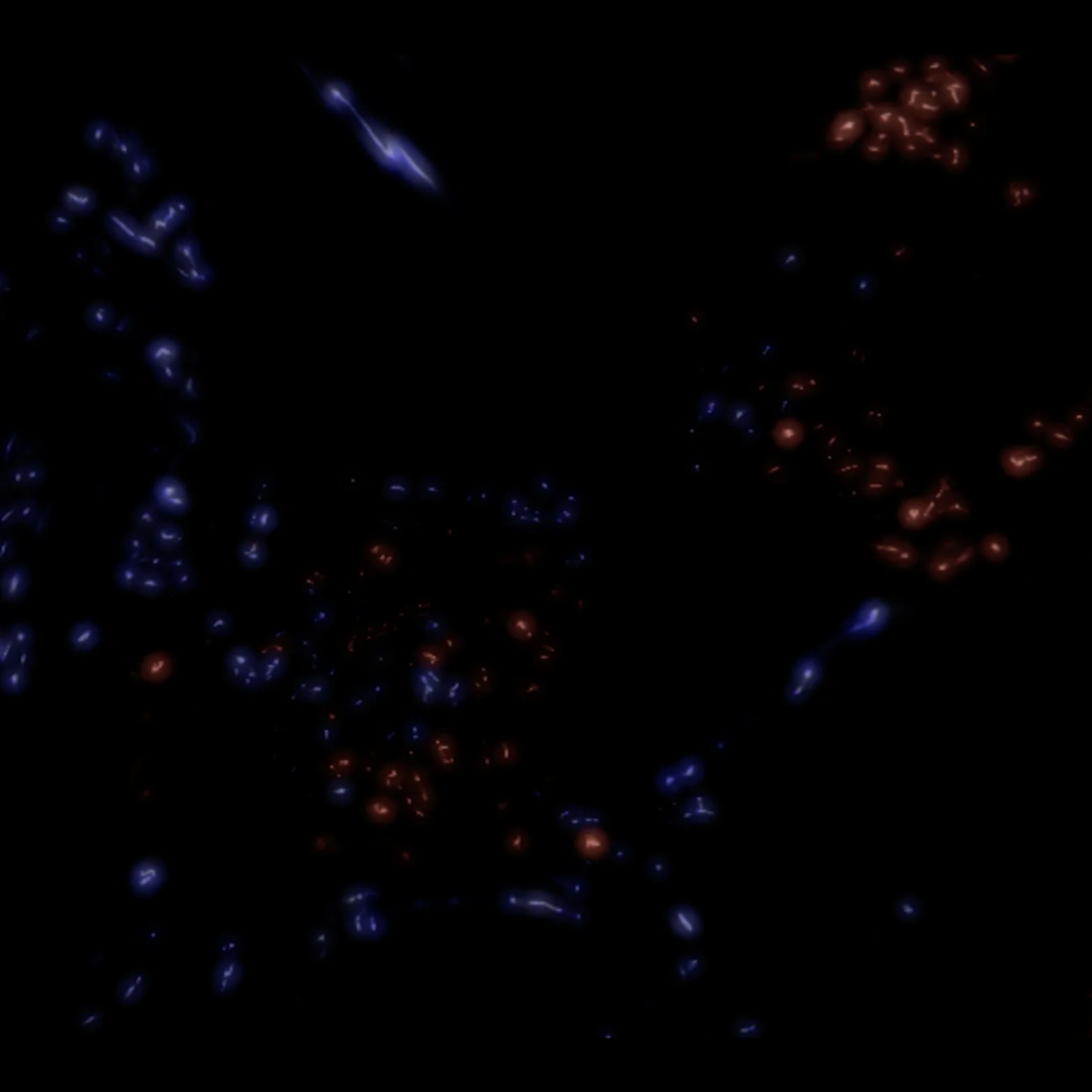
The Blind Spot
EEG-reactive virtual reality
A collection of brain-reactive virtual-reality scenes that propose a feedback loop in which experiencing the space modifies it.
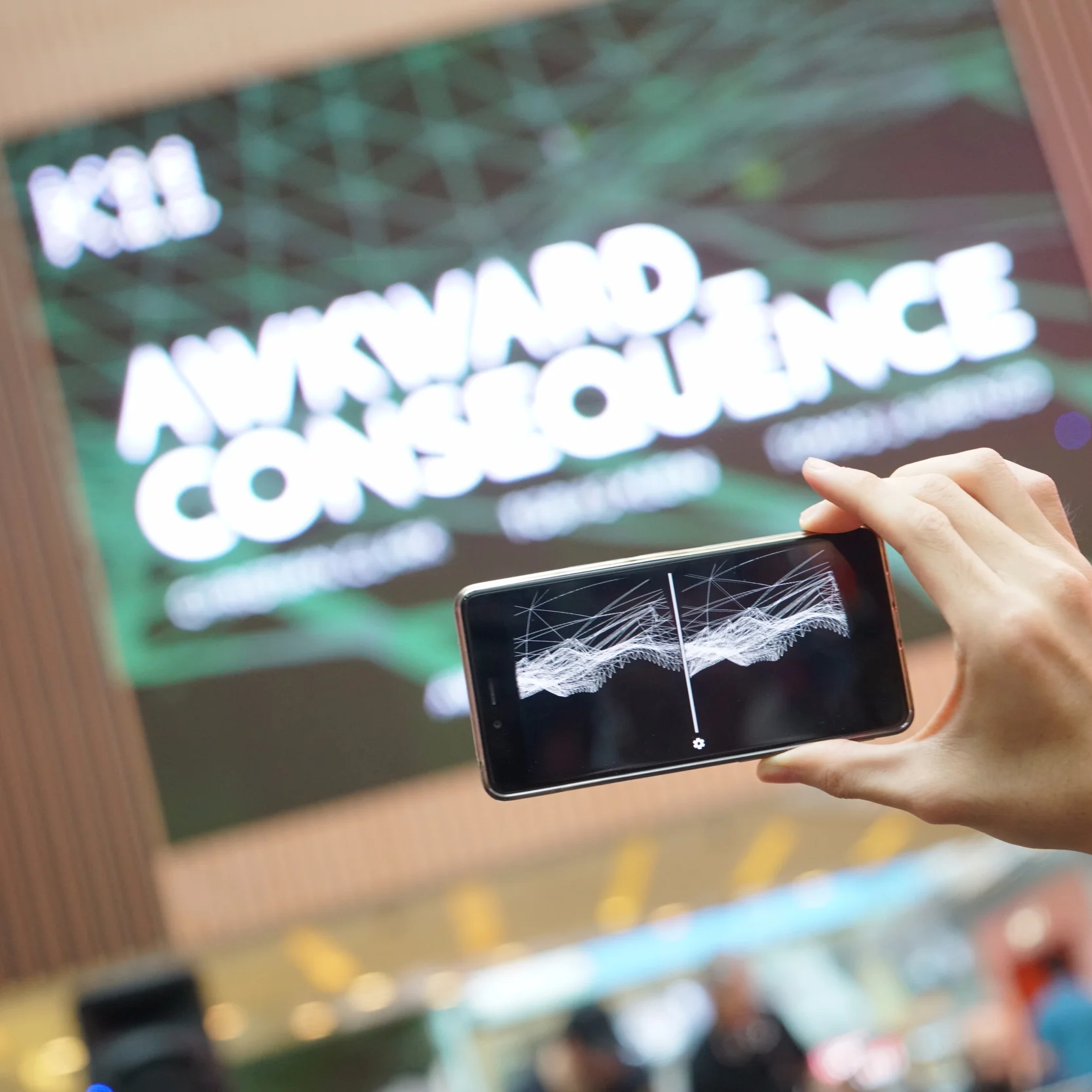
Awkward Consequence
Mixed-reality installation
AWKWARD CONSEQUENCE is a massive VR performance.
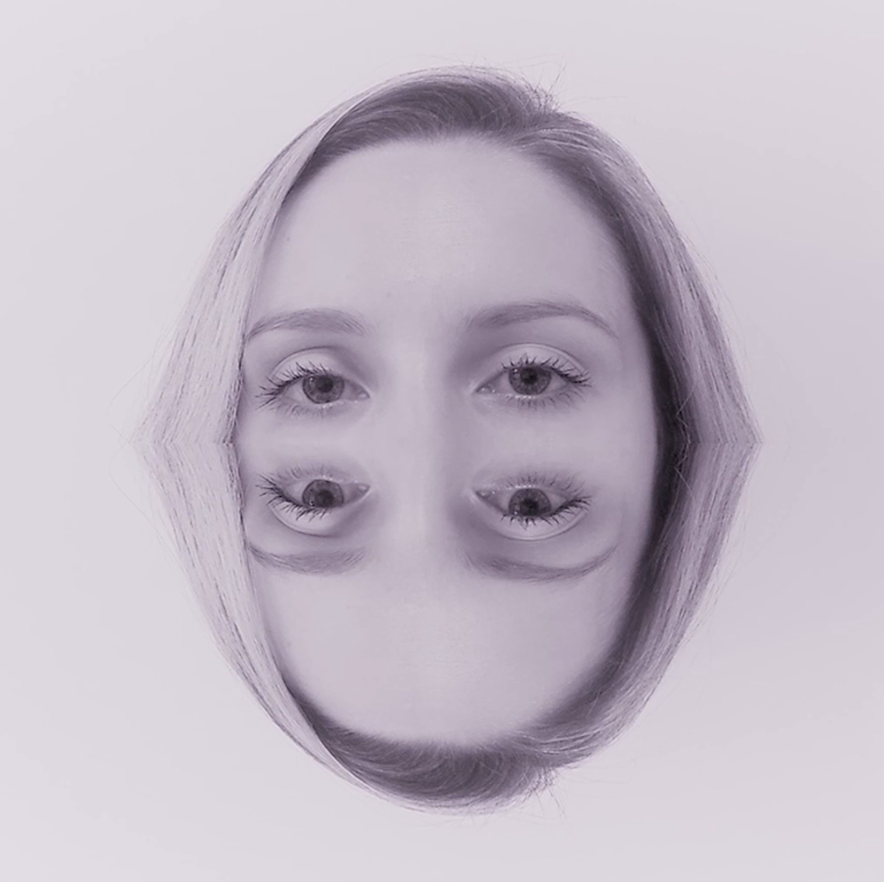
Face Study
Audiovisual performance software
This work explores several topics that I am interested in: the development of instruments for visual performance, the relationship between visuals and sound / music, as well as exploring non-verbal communication: what new modes of communicating one's emotional state can be created?
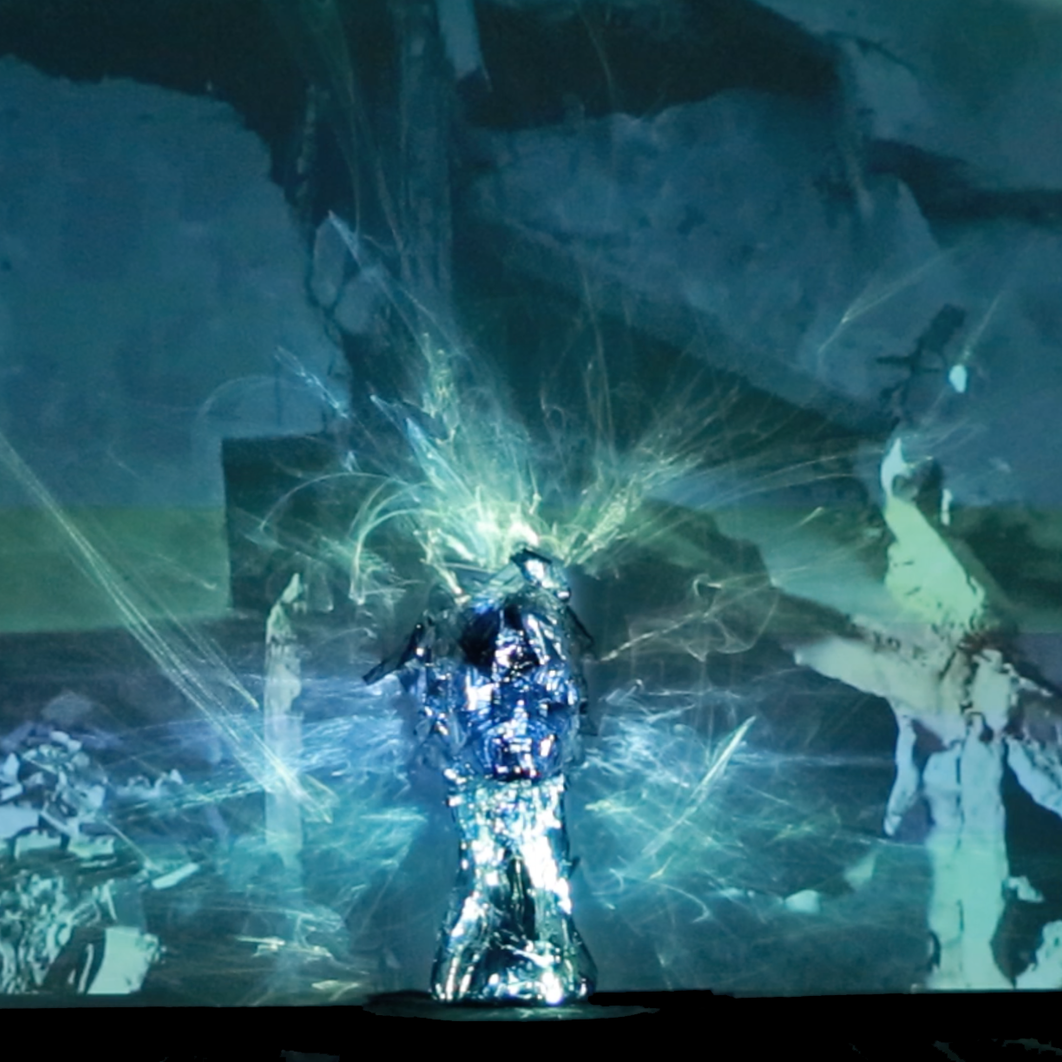
HOMS
Audiovisual installation
HOMS, is a mixed-media installation where drone footage of the ruins of Homs, which I digitally slowed down, is projected on a wall. Before the wall there is a metallic head that reflects these images creating ever-changing beautiful patterns in the room: a beautiful spectacle made from the ruins.
Wind
Mediated reality prototypes
Wind: Mediated Reality Visualization
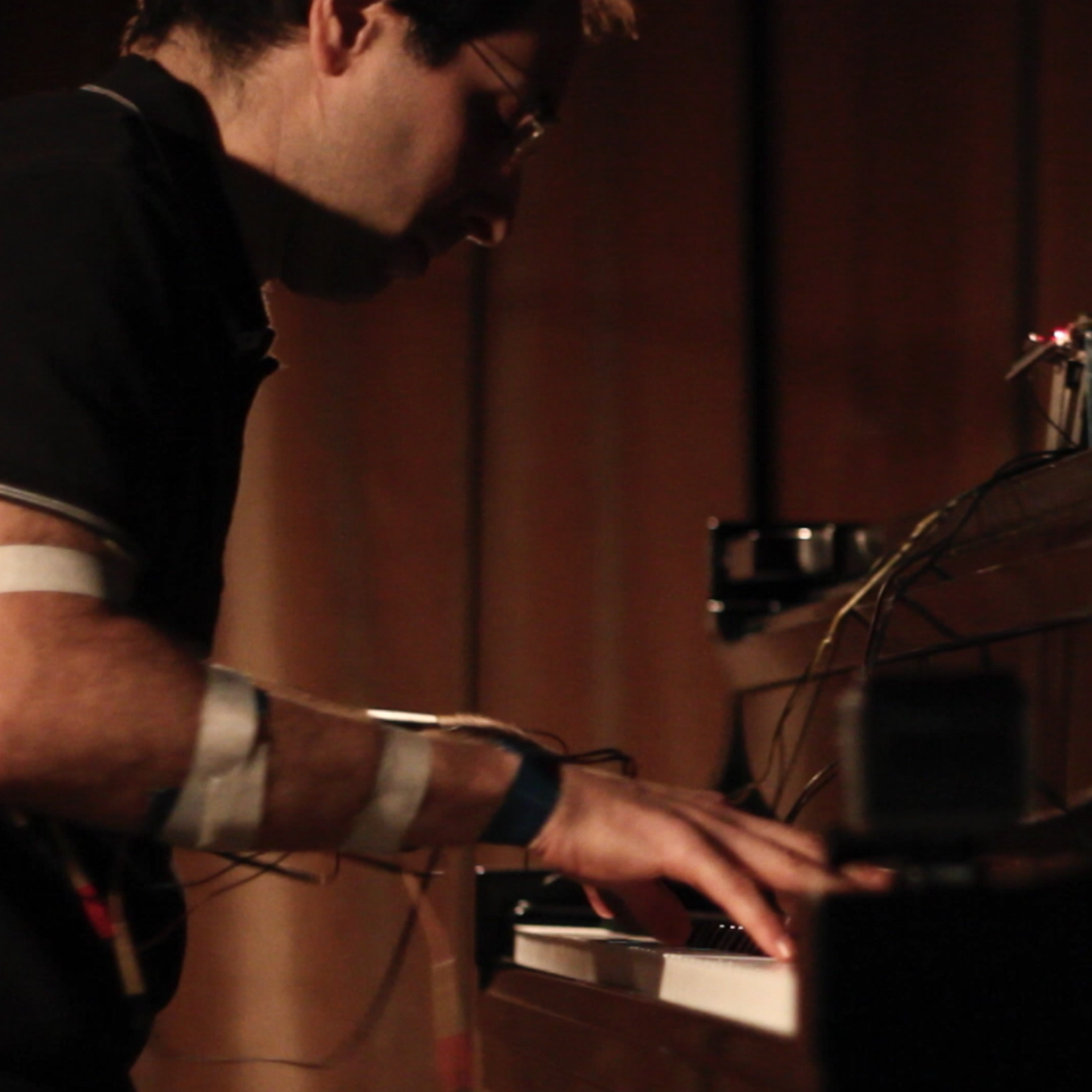
5500
Audiovisual performance; electrical muscle stimulation
5500 is both a musical performance and a data visualisation performance. It consists of a performance of Ludwig van Beethoven's Piano Sonata No. 8 in C minor, Op. 13, commonly known as Sonata Pathétique, where the pianist’s execution is disrupted using computer–controlled electrodes which stimulate the nerves in their arms causing involuntary contractions of his or her muscles, and affecting the final musical result.
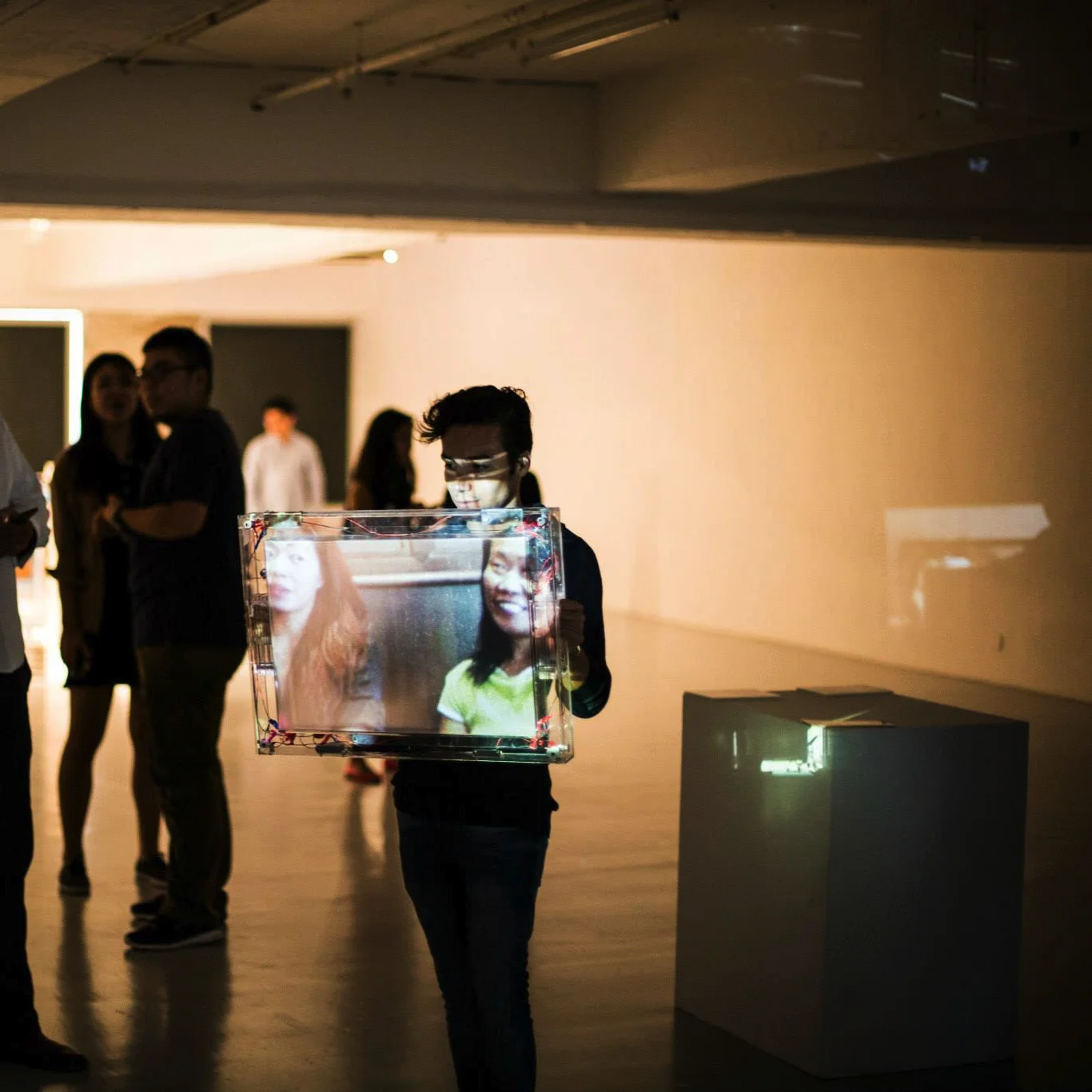
Foreign Helpers
Interactive audiovisual installation
With four projectors and four independent audio channels, interactors use a hand-held screen to explore images of Hong Kong filmed by AAVS students, paired with interviews in which foreign helpers shared their life experiences. This spatially deconstructed documentary aims simultaneously to explore domestic helpers’ experience of Hong Kong and to document their narration in their own words.
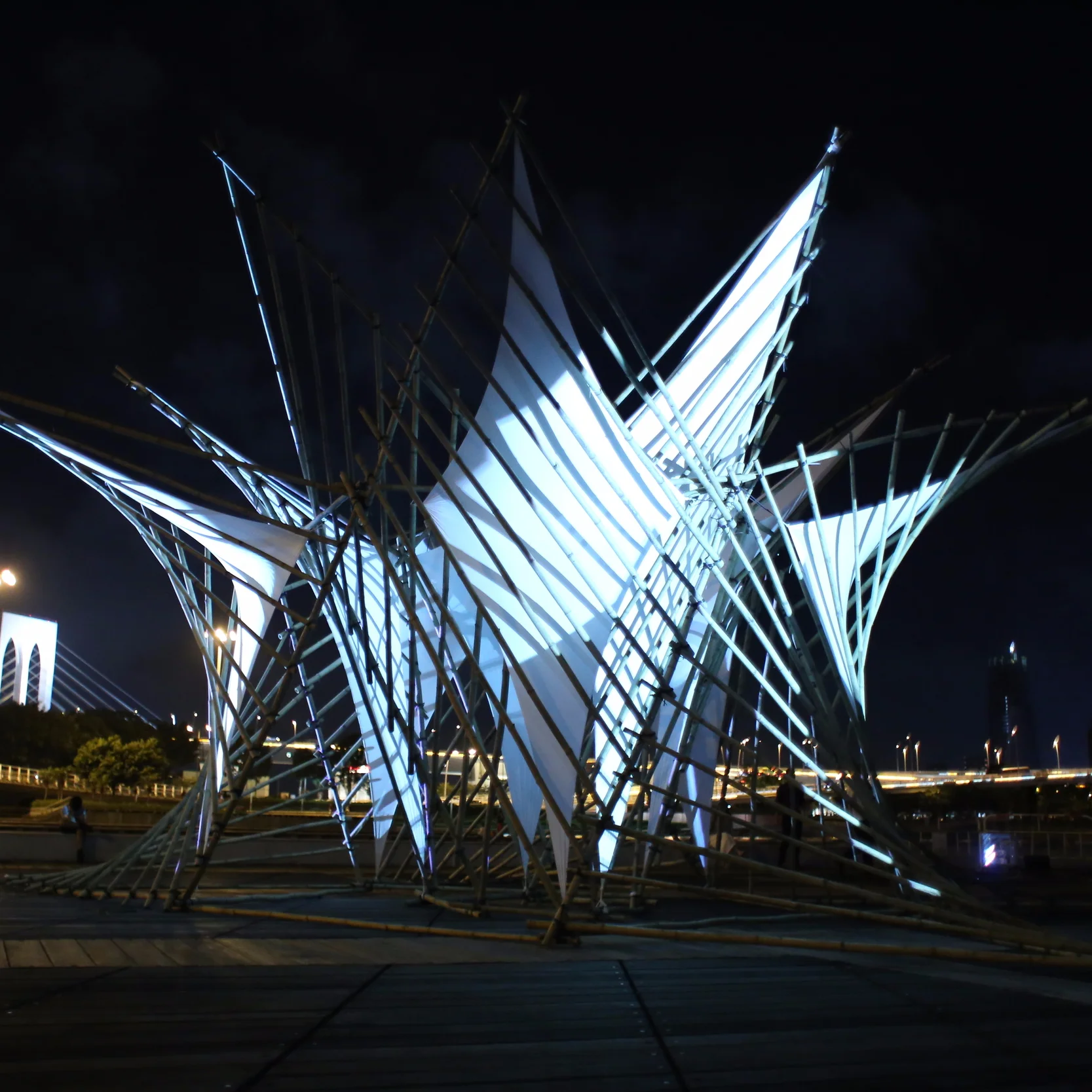
Trace Pavilion
Architectural pavilion; audiovisual installation
Trace Pavilion is the third in a series of bamboo pavilions designed and built by architecture students at University of Saint Joseph in Macau.
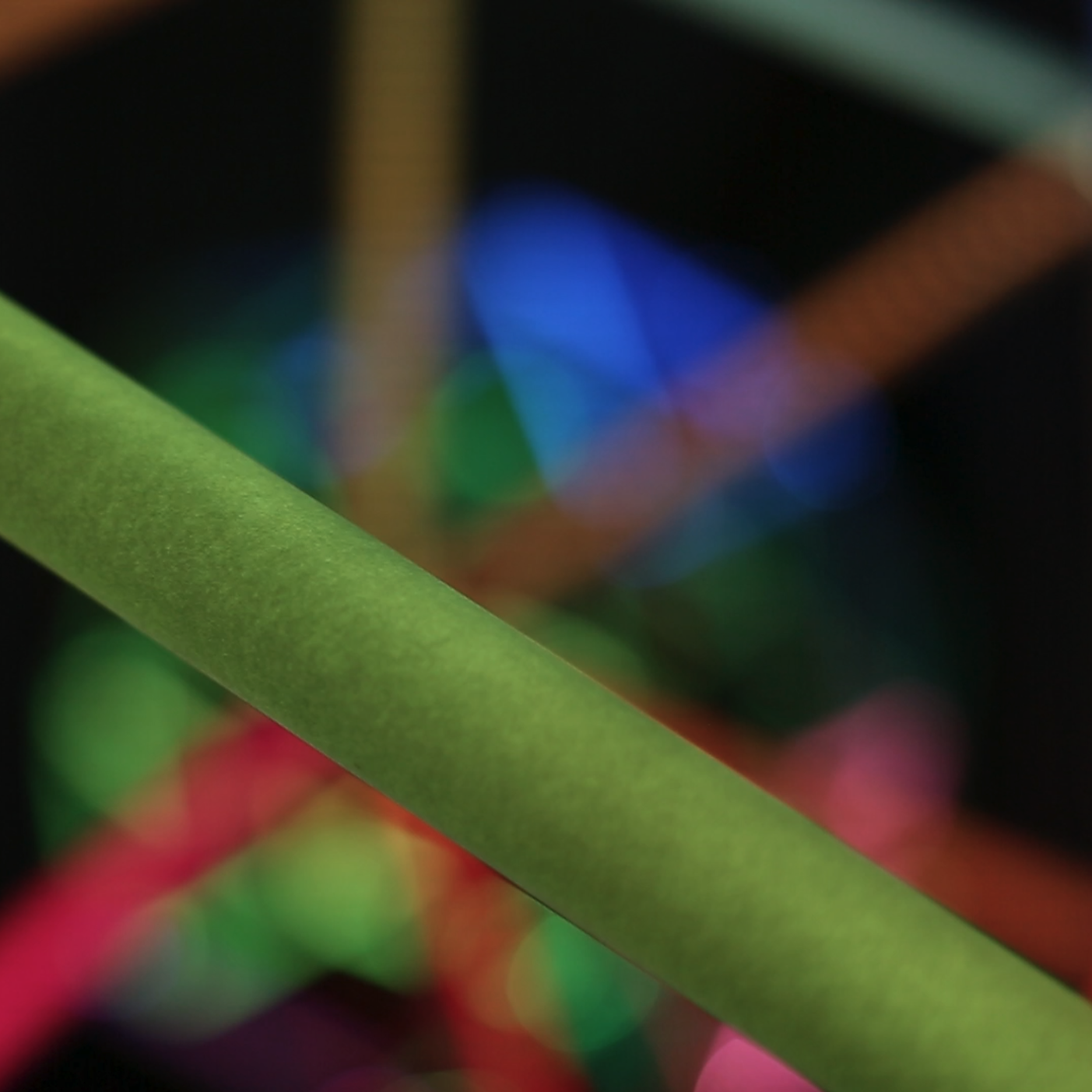
Barcelona
Interactive installation
The piece consists of a two–meter tall Pentakis dodecahedron, with each edge independently lit using LED strips. The installation reacts both to its environment – it senses movements and sounds produced in its vicinity – and to remote interactors via web and mobile real-time interfaces.
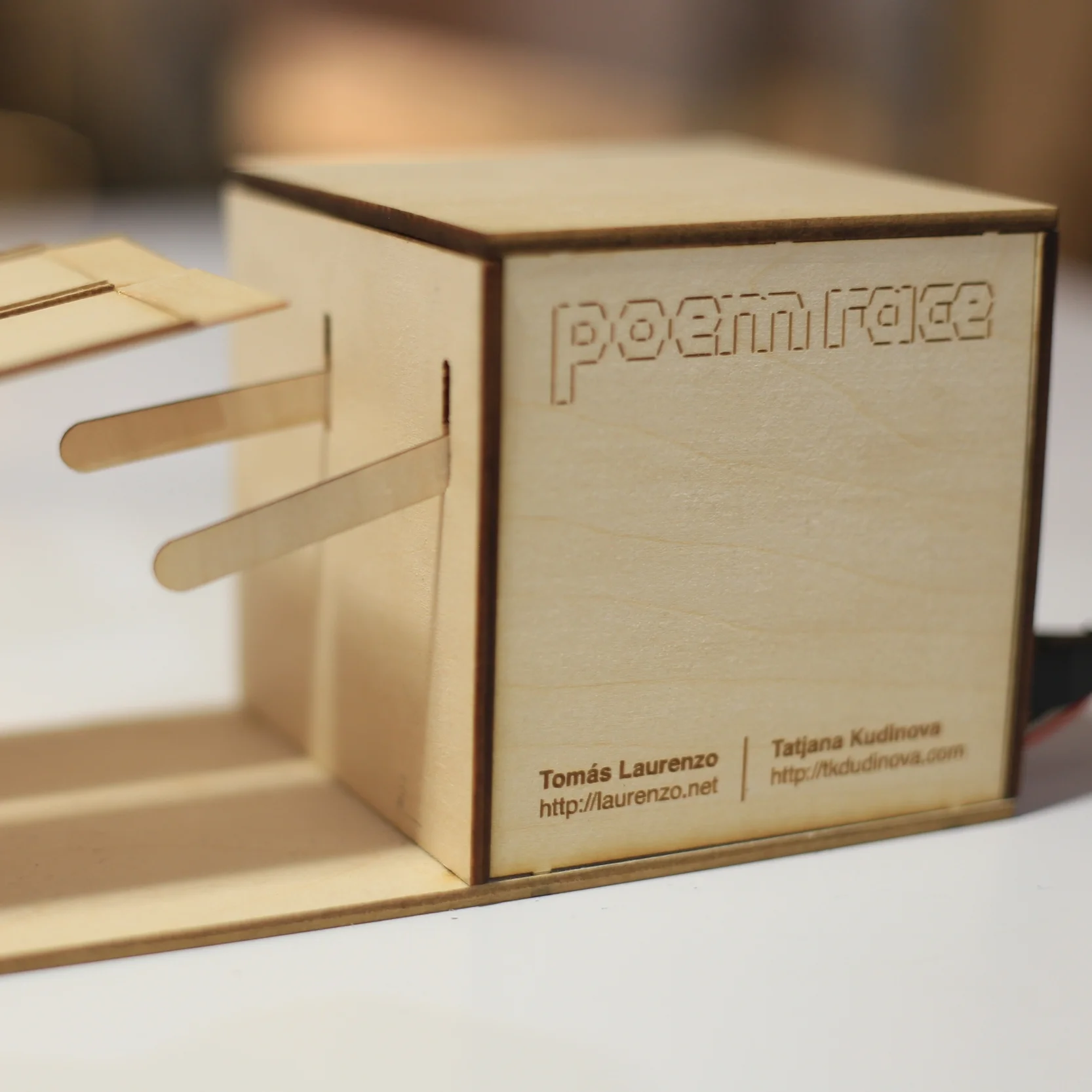
Poem Race
Interactive installation
Poem Race is a tongue–in–cheek interactive installation proposing a reflection on the socioeconomic role of contemporary art. Having grown tired of artist rankings (does it make any sense to say that Shakespeare was the best English writer? What does it mean to 'be the best'?) The piece allows to 'compare' classic English poets attempting to provide an objective, yet absurd, comparison method: poem racing.
Smile
Interactive audiovisual installation
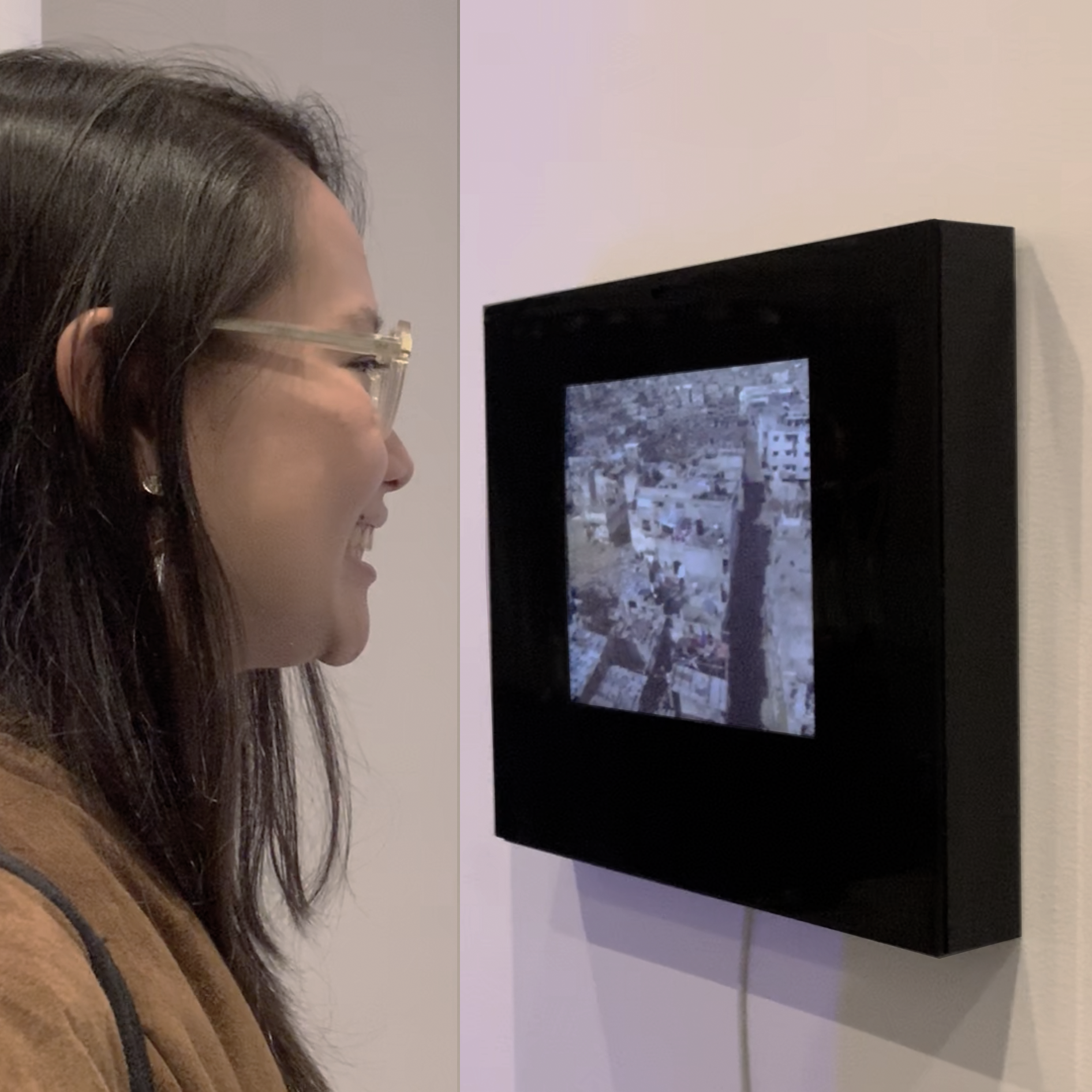
Smile is a mixed-media installation consisting of a screen situated in a black box, mounted on the wall. The screen is black. However, when an interactor smiles at the installation, drone-footage of the ruins of Gaza, digitally slowed-down by the artist, fades in. If the interactor stops smiling, the video stops. It only plays when the interactor smiles broadly at it.
TEDx Montevideo
Opening film and audiovisual backdrops
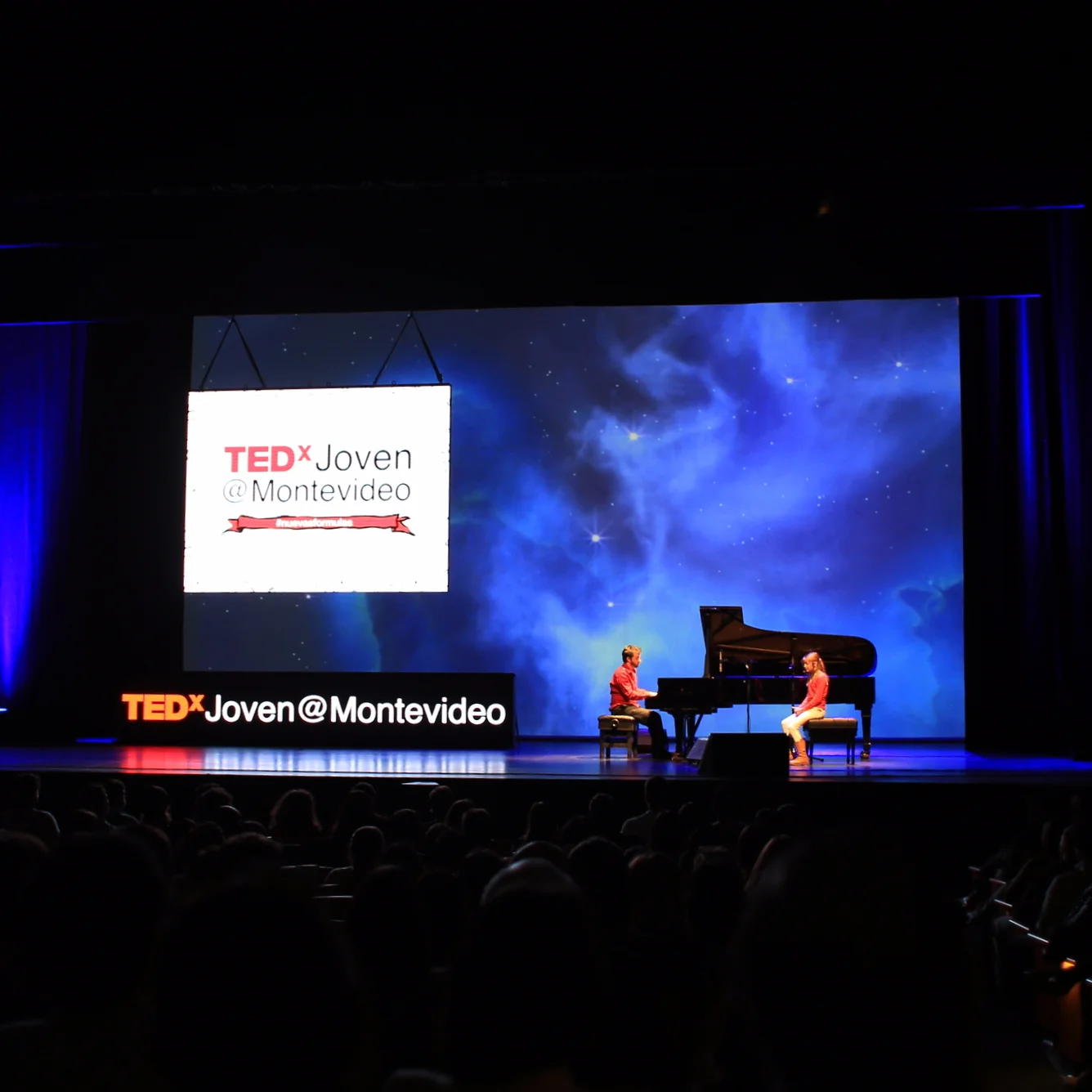
We were asked to create an opening video and backdrops for the TEDx show in Montevideo.
Two Systems
Interactive stop-motion and sound installation
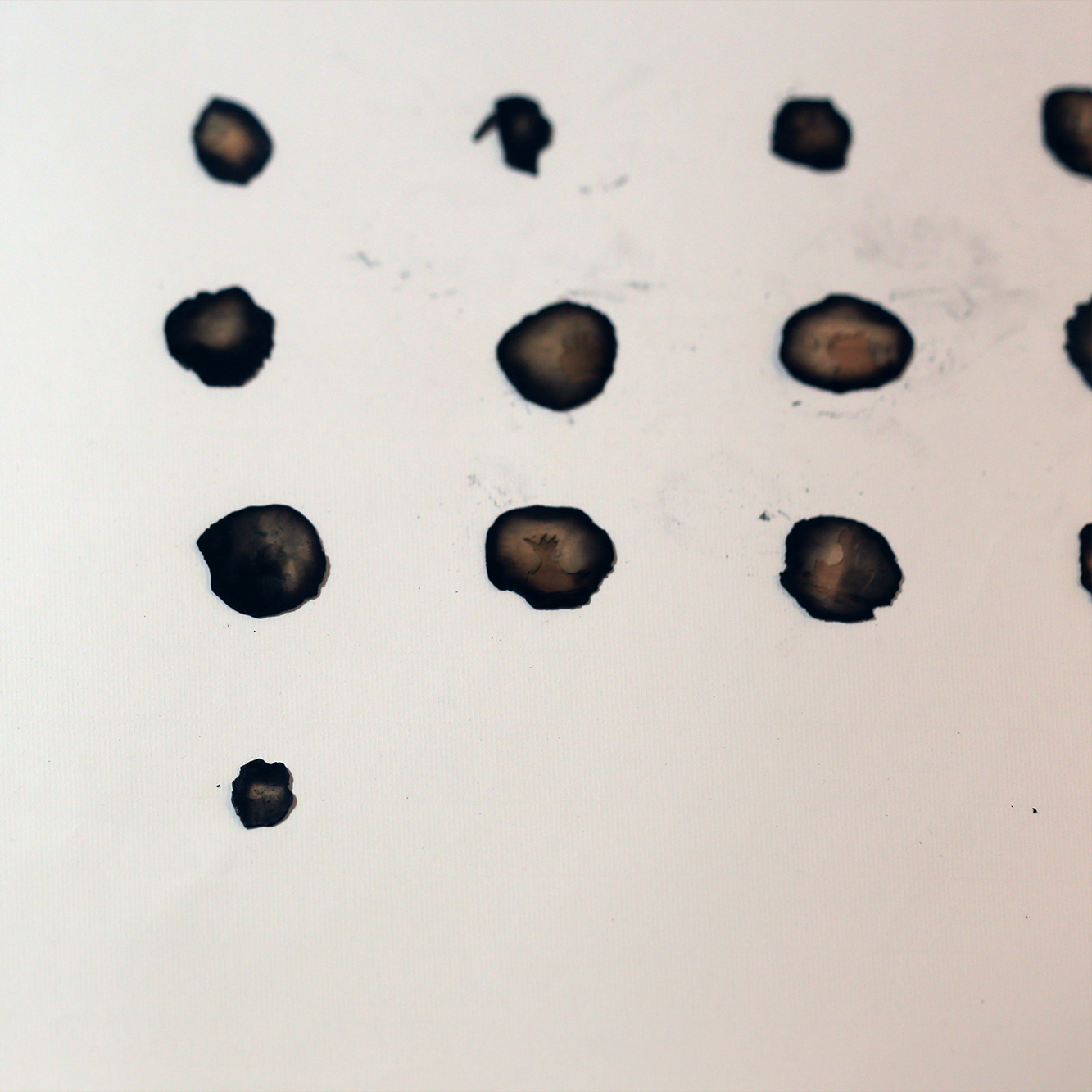
The animation path is controlled by the spectator with two knobs. The knobs directly control the sound created by the installation. This sound is generated by algorithmically combining two recordings of the Umbrella Revolution, Hong Kong's student-led pro-democracy demonstrations in 2014.
Facing Interaction
Facial interaction research and prototypes
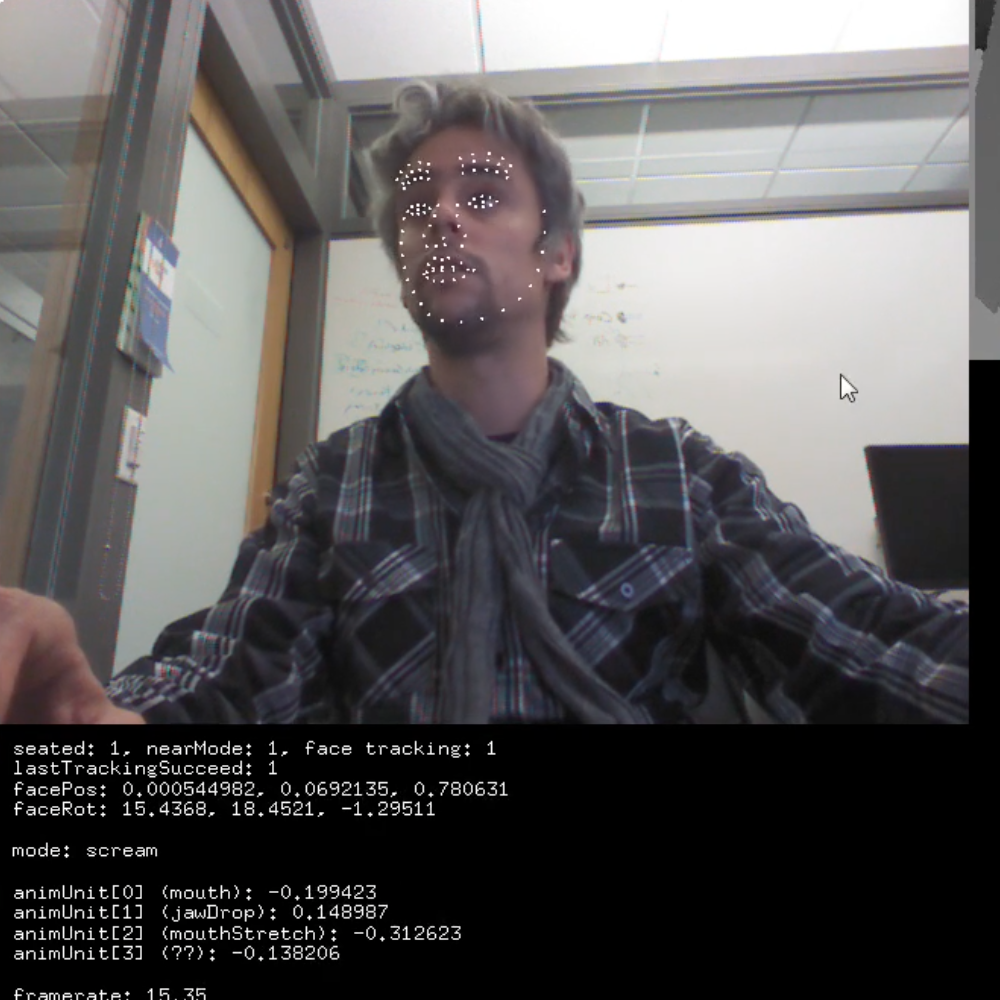
Facing Interaction was the research project that arose during my Fellowship at Microsoft Research, where I collaborated with Dr. Qin Cai in the creation of several prototypes of interactive artworks. In this project we explored how sensations and emotional states might be communicated non-verbally to others, to ourselves, to objects, or even to places.
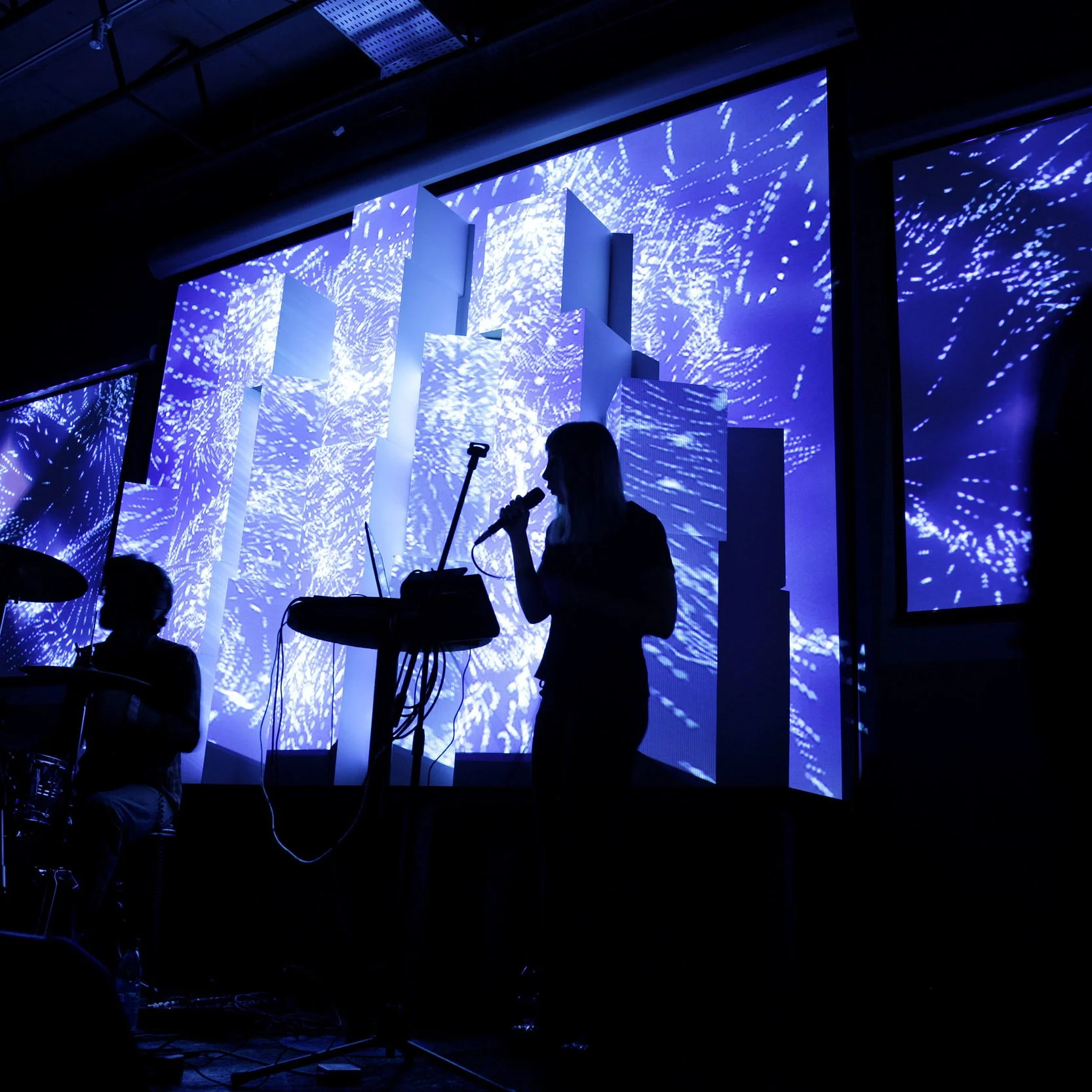
Lituania Lituania
Audiovisual performance; projection mapping
Lituania Lituania was an audiovisual show and collective. Combining live music, live visuals, projection mapping, and, in one case, a modified version of Celebra, we pursued the idea of the Gesamtkunstwerk: a work bringing its different artistic forms into a single whole.
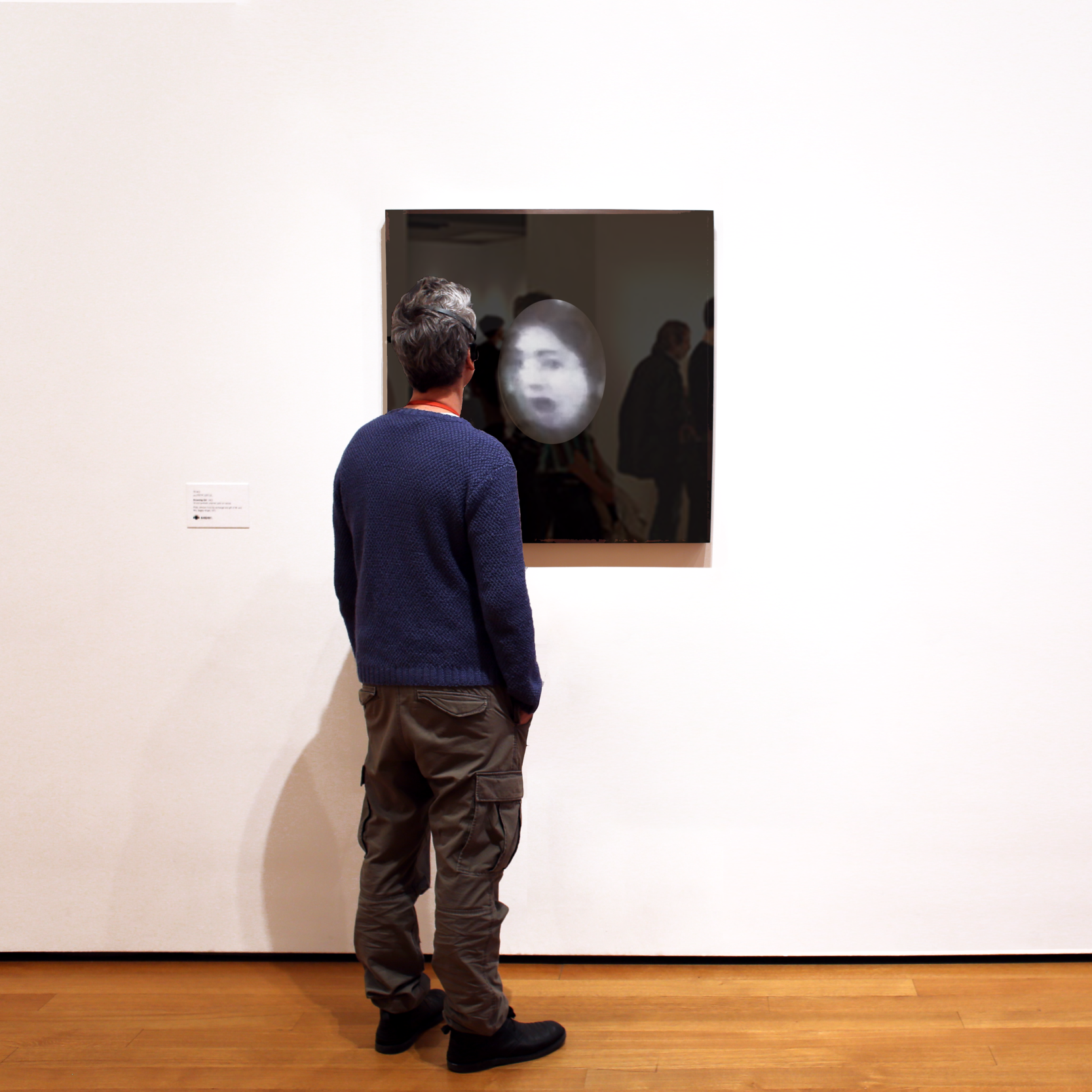
Walrus
Interactive augmented mirror; installation and browser versions
Walrus is an interactive mirror that substitutes a participant’s face with previously recorded faces in similar positions and expressions. The installation was developed between 2011 and 2016; wwwalrus, its browser version, continues the project from 2026.
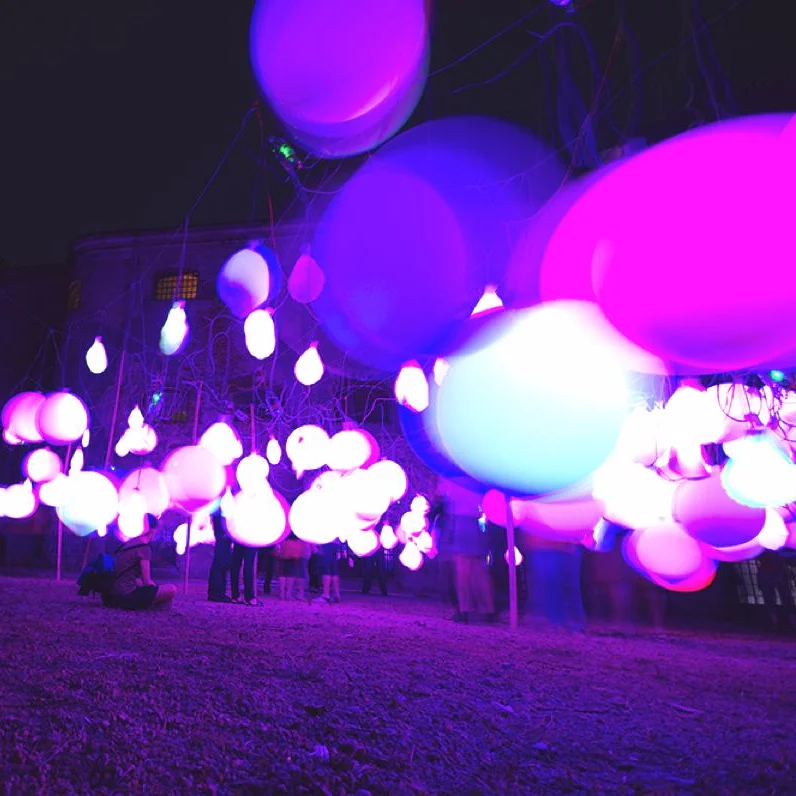
Celebra
Interactive lighting installation; audiovisual performance
Celebra is an interactive installation, originally commissioned by the Uruguayan government as part of the celebrations of Uruguay's 200th anniversary. It is a massive interactive installation that can also operate as an audiovisual performance tool.
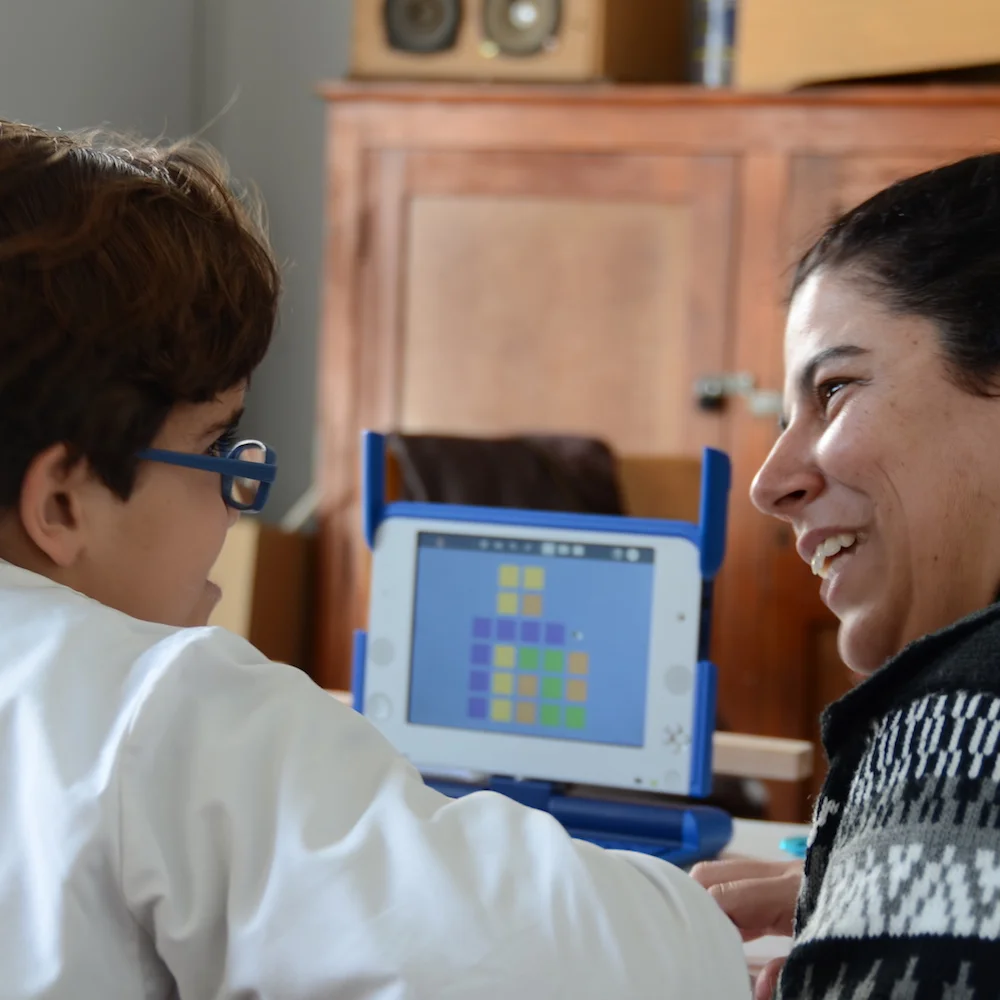
NEXO
Interaction research; accessible interfaces
Although Plan Ceibal explicitly includes children with disabilities, we found that children with motor impairments were not able to use the XO computers. The NEXO project (2011–2012) aimed to create alternative and personalised interfaces to include users with motor disabilities.
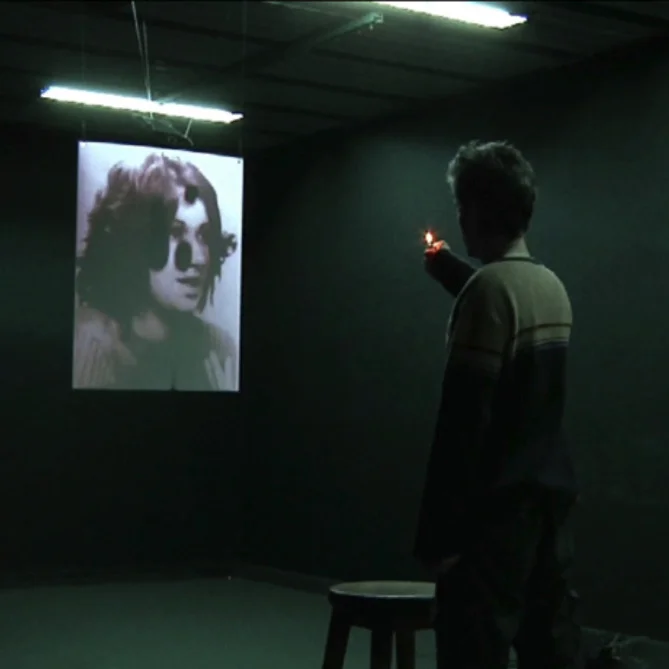
Nibia
Interactive audiovisual installation
Nibia is an interactive installation that questions the relationship between society and its recent past, through the recontextualisation of a particular image.
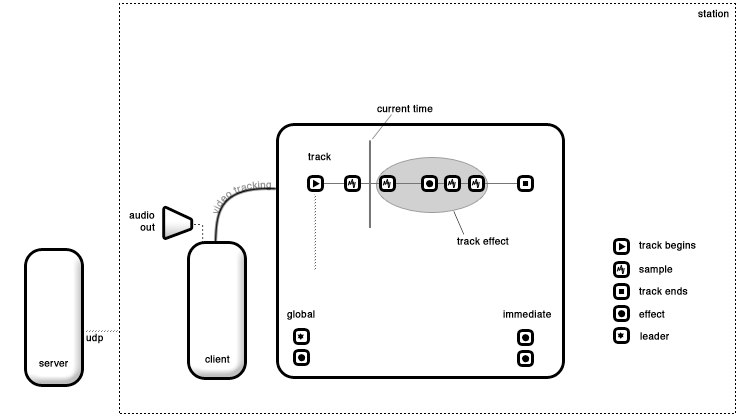
YARMI
Augmented-reality musical instrument
YARMI began as an augmented-reality musical instrument in which tracked physical objects could be used to construct and manipulate musical relationships. It was documented at NIME 2009 and revisited in A New Iteration of YARMI.
Critical Point
Live visuals for cello and computer music
In 2009 I had the honour of being a Visiting Scholar at Carnegie Mellon University's School of Music, where I collaborated with Prof. Roger Dannenberg by providing visuals for his piece Critical Point.
Puzzling
Interactive installation; tangible interaction and computer vision
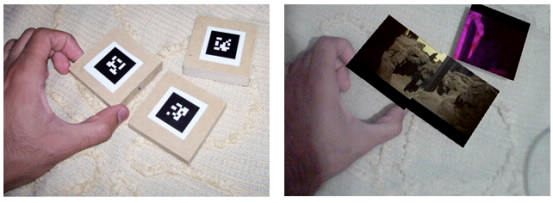
Puzzling is an interactive artwork developed with Ernesto Rodríguez. Scenes from films are divided into fragments and mapped onto wooden blocks tagged with visual tracking markers. A camera tracks the blocks, while a projection shows the moving images superimposed on them.
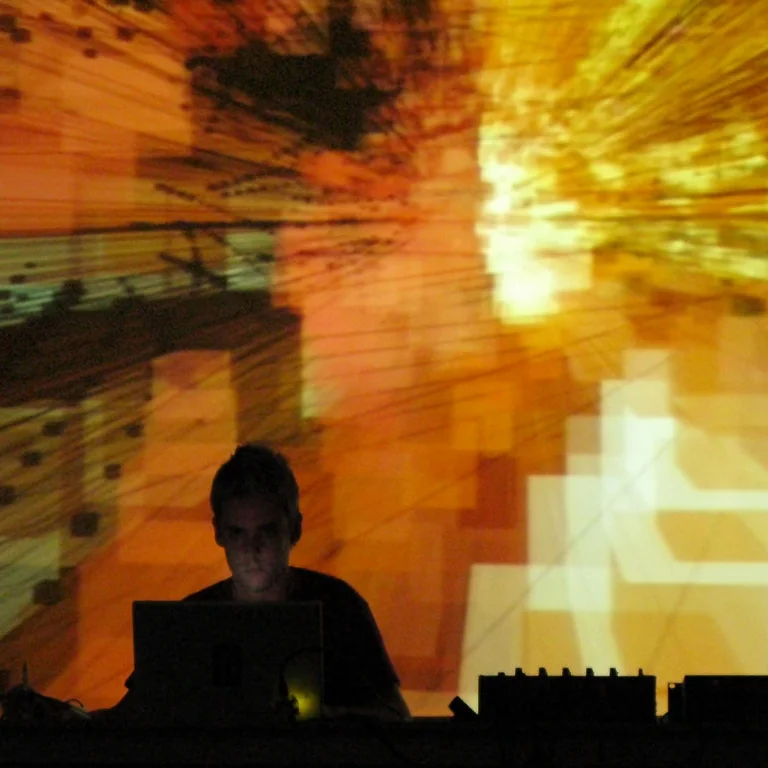
Ribbons
Live-cinema instrument
Ribbons is a real-time visual instrument created for maximising the expressiveness of the performer within its aesthetic paradigm. Its design questions the basic assumption of a flat rectangle as image space by presenting a virtual three-dimensional space where the footage can be projected and deconstructed, thus adding a new dimension of expressiveness orthogonal to traditional narrative.