2014
Barcelona
Barcelona is an interactive installation. Its interest resides not only in its aesthetic proposal, but also in that it shows how media appropriation allows artists to reclaim and re-signify the technological production while reflecting on the relationship between DIY practices and state-of-the-art technologies.
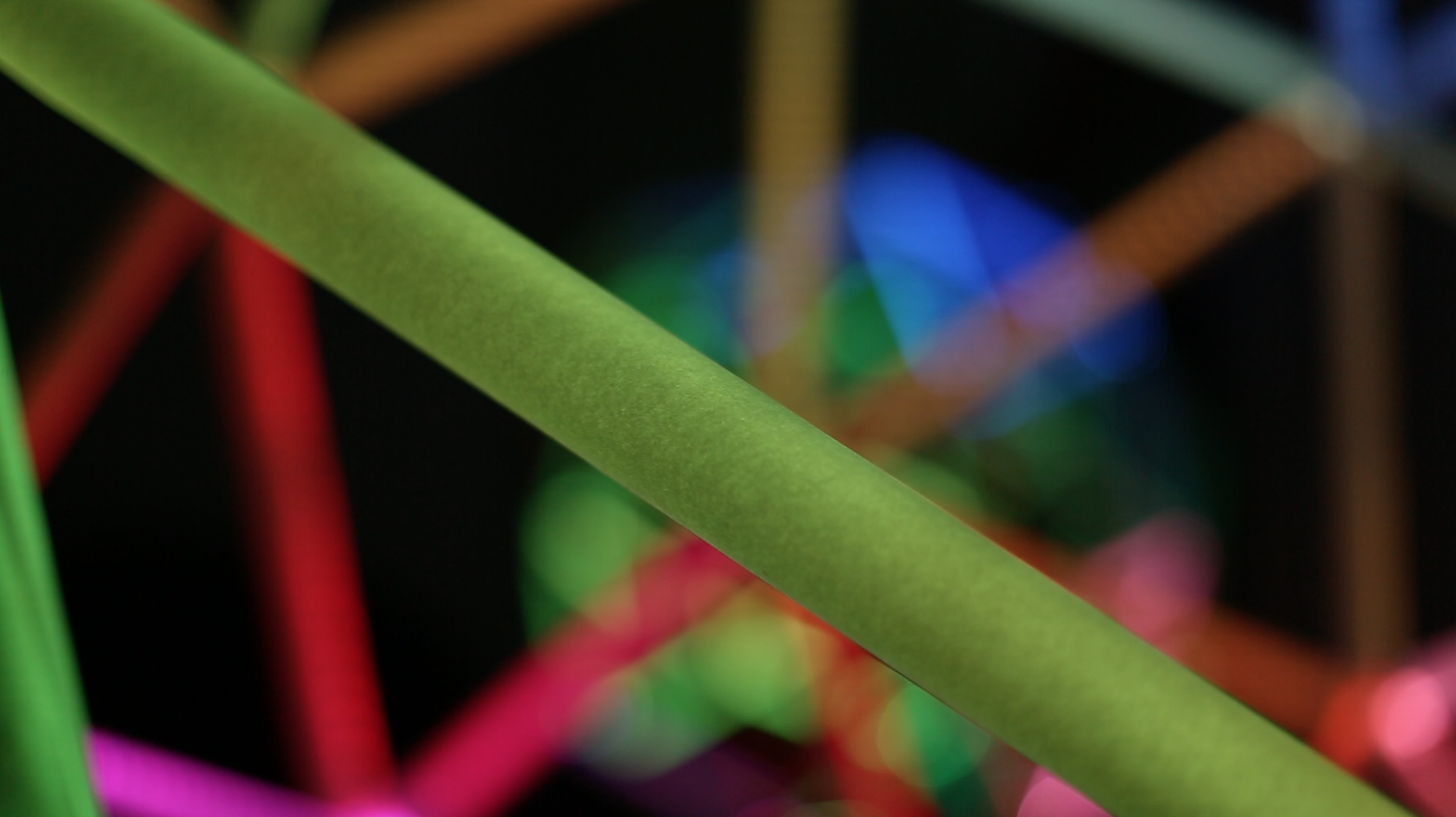
Barcelona is an interactive installation. Its interest resides not only in its aesthetic proposal, but also in that it shows how media appropriation allows artists to reclaim and re-signify the technological production while reflecting on the relationship between DIY practices and state-of-the-art technologies.
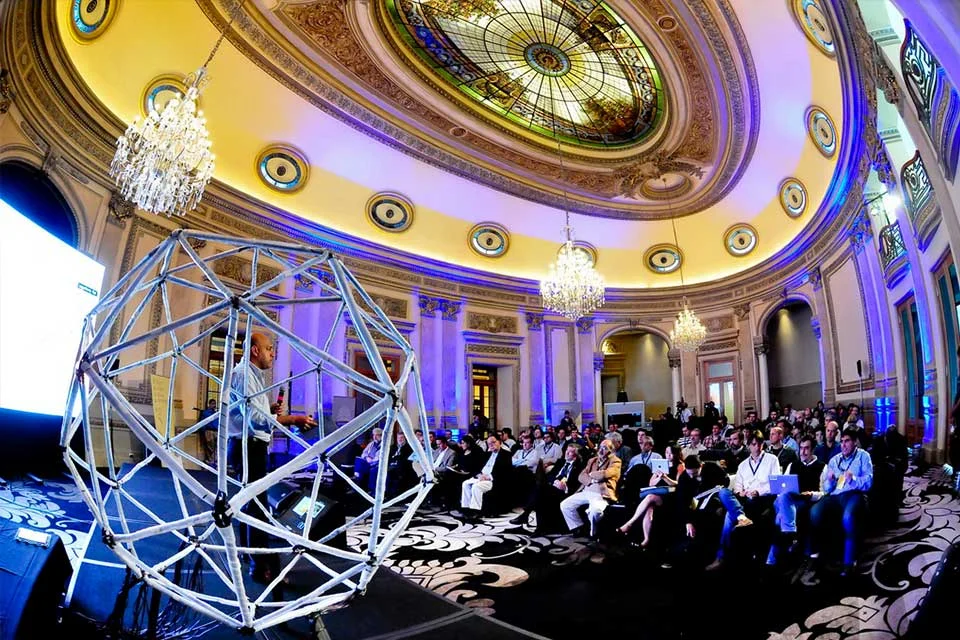
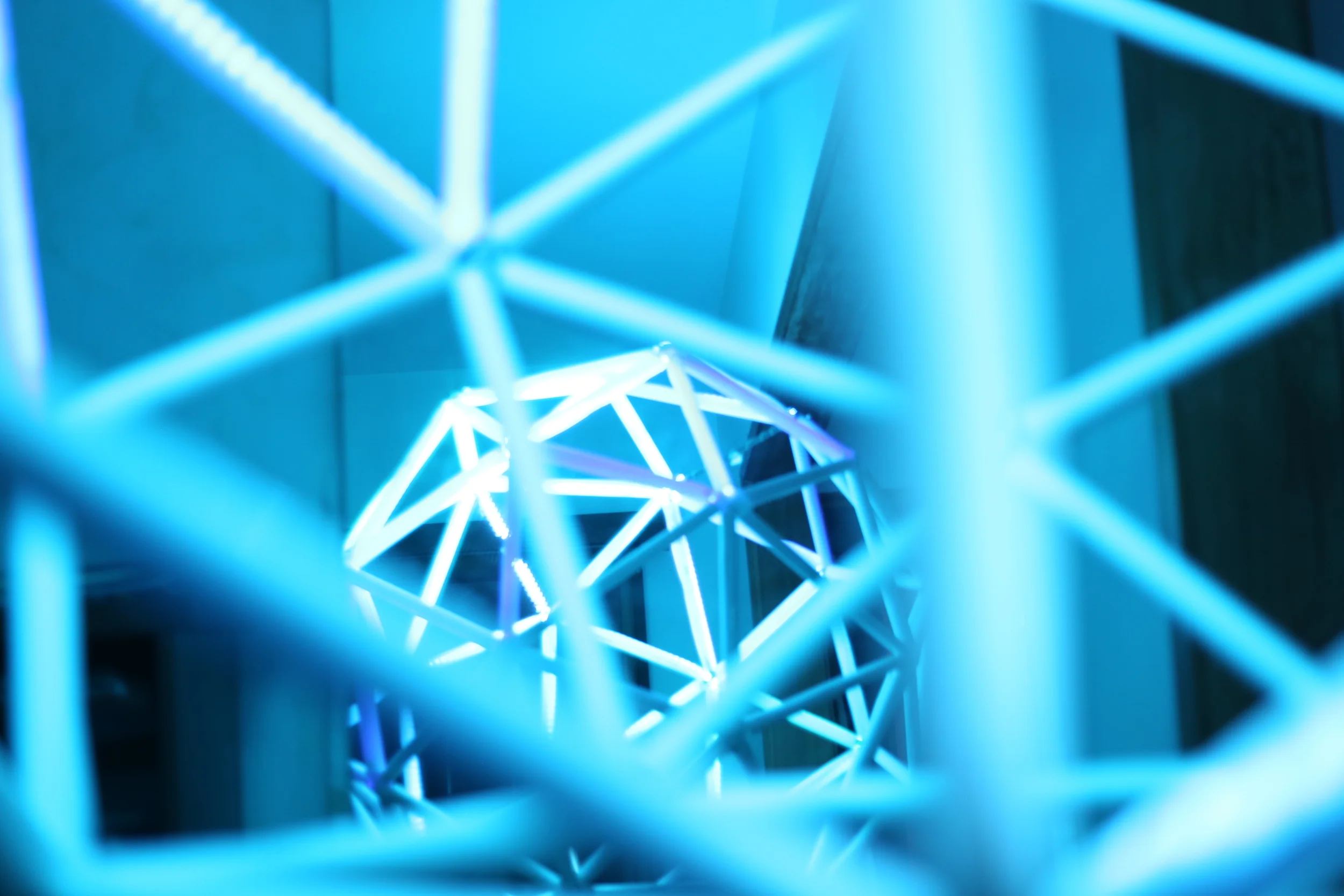
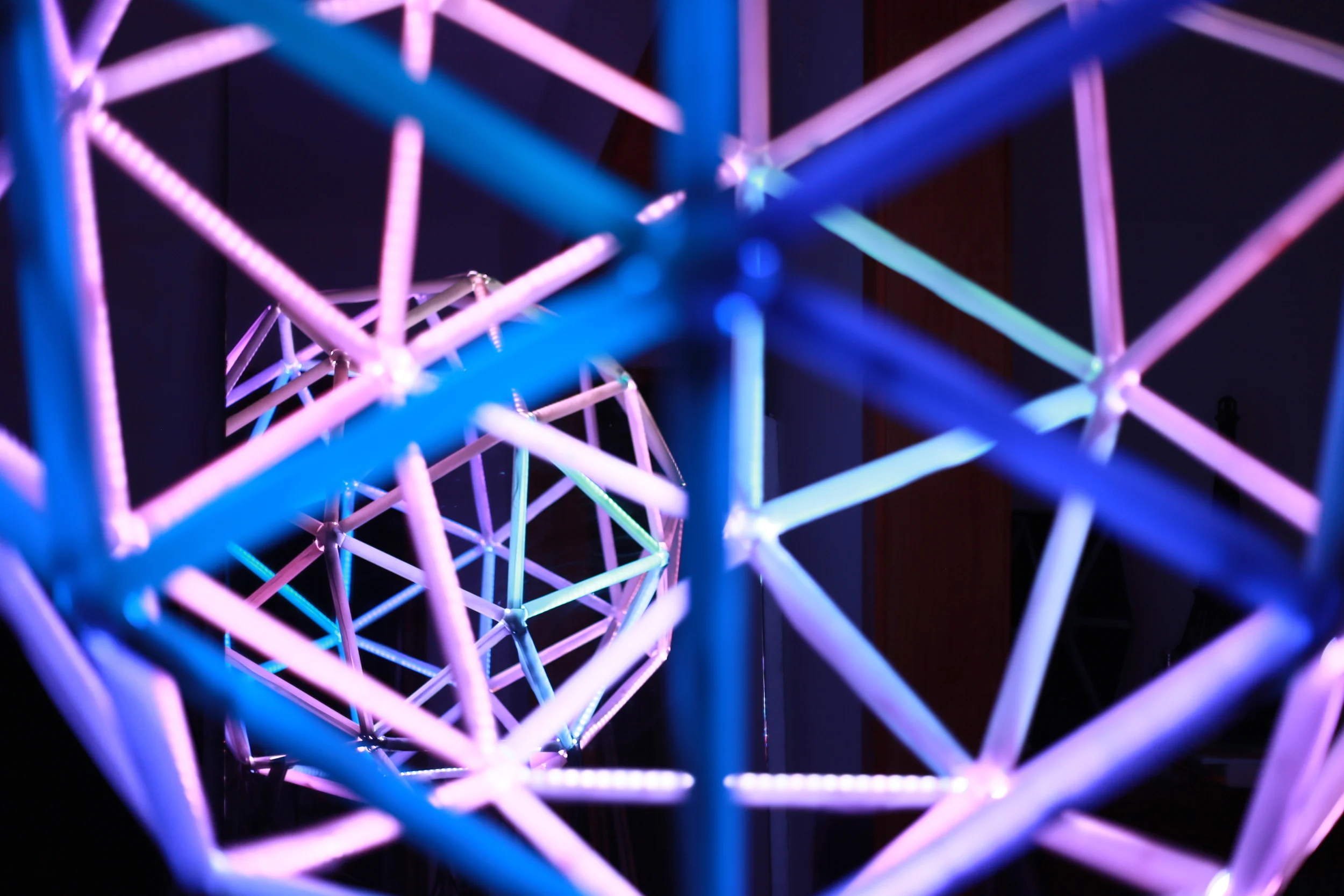
The piece consists of a two–meter tall Pentakis dodecahedron, with each edge independently lit using LED strips. The installation reacts both to its environment – it senses movements and sounds produced in its vicinity – and to remote interactors via web and mobile real-time interfaces.
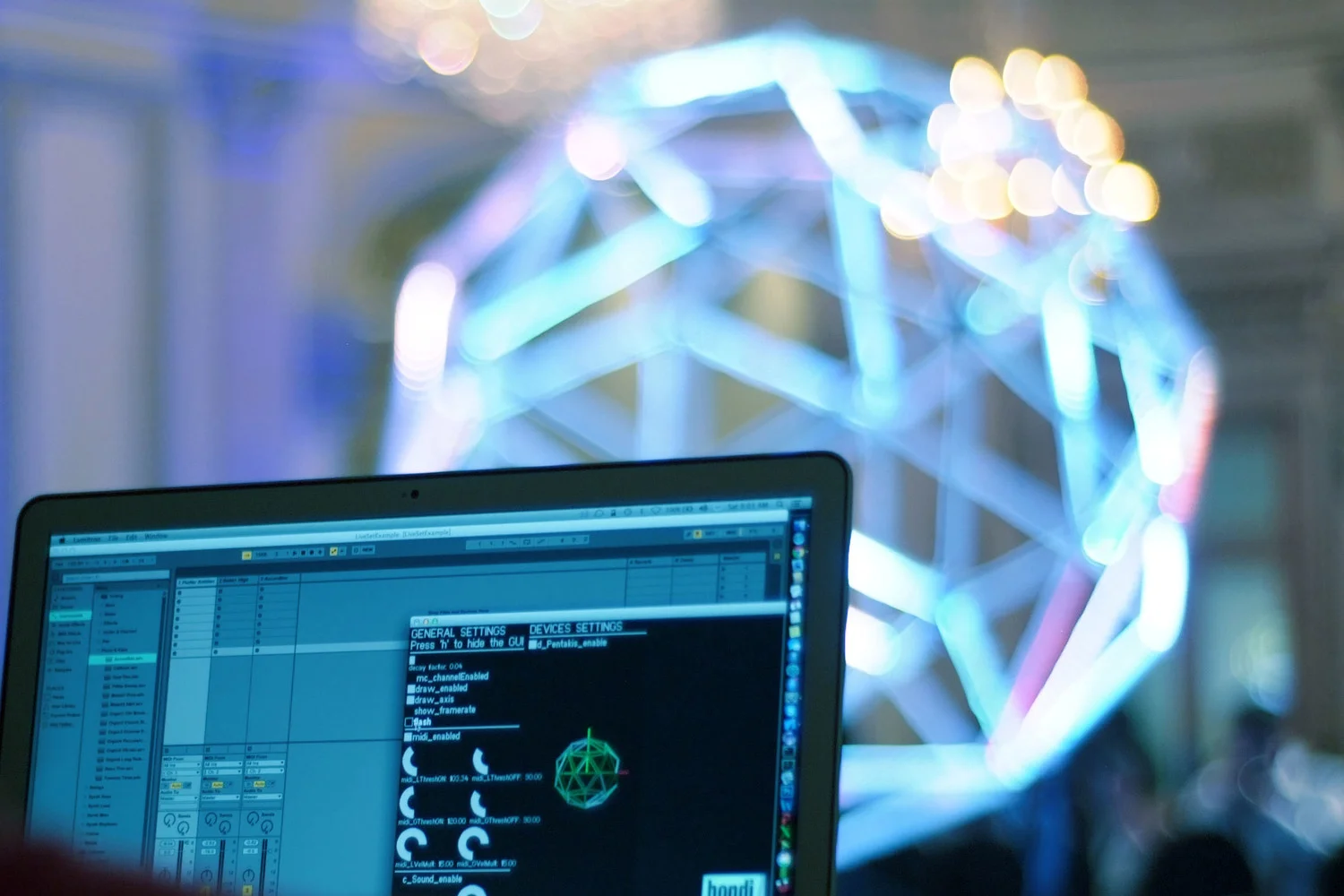
Barcelona is also a performance instrument offering a control interface that allows for multi-user real-time audio-visual performances.
All the hardware in Barcelona is of our authorship, and every functional component is visible and contributes to its appearance. Spectators can follow the data path from the controllers to the piece, but not inside of the structure, allowing for an organic perception of the piece.