2026–ongoing
YOU DO NOT CONTROL THIS MACHINE
An institution lends computing power to other people while giving up the right to choose what their permitted computations are for.
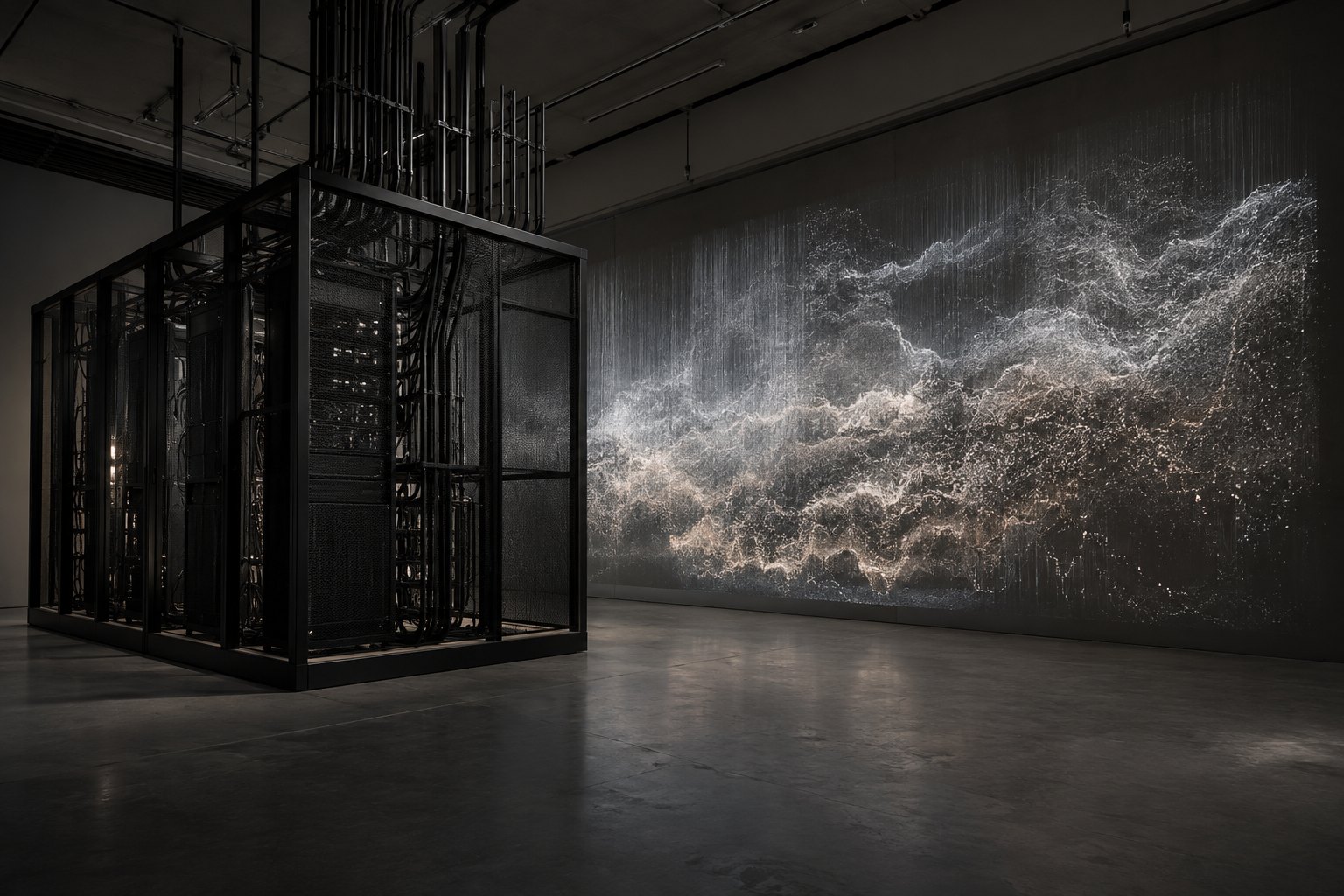
YOU DO NOT CONTROL THIS MACHINE asks an institution to lend computing power while surrendering a specific authority over its use. Someone outside the institution requests a quantity of computing resources, and an available machine commits those resources before receiving the encrypted program it will run. The requester receives the useful result; the institution retains the machine, the responsibility for operating it, and a visible residue drawn from traces of the computation that have been reduced to limit what they reveal.
The host still sets limits on resources, network access and security, and remains responsible for maintenance and legal obligations. Within those limits, however, it does not choose what a permitted computation is for. Ownership of the machine is separated from authority over the purposes it serves.
The current prototype runs computations across multiple machines and returns encrypted results to the requester. Its institutional form remains under development: the artwork needs an independently administered host willing to contribute computing power under this division of authority.
A beautiful exhaust
The useful output never appears in the installation. Completed jobs deposit anonymous visual matter into a persistent field; live activity folds and displaces it; older activity sediments and decays. The gallery sees formal consequences of computation whose purpose and result remain outside its possession.
The current visualisation is an initial version. The installation is being developed through research into relief, colour, light, physical depth, architectural placement and changing perception. Its ecological and material account is part of the work: greater resource consumption must not become automatically equivalent to greater visual intensity.
Current research
Development centres on four connected problems: independent institutional stewardship; security when running programs supplied by external requesters; public access that does not privilege only technically expert users; and an installation whose visible form changes through external use without revealing the requester’s content.
The project extends artistic histories of chance, instruction, delegated execution and participation by asking the host to give up control over the purpose of its computing infrastructure. Construction remains necessary because the division of authority has to survive administration rather than remain an intention.