2014
Smile
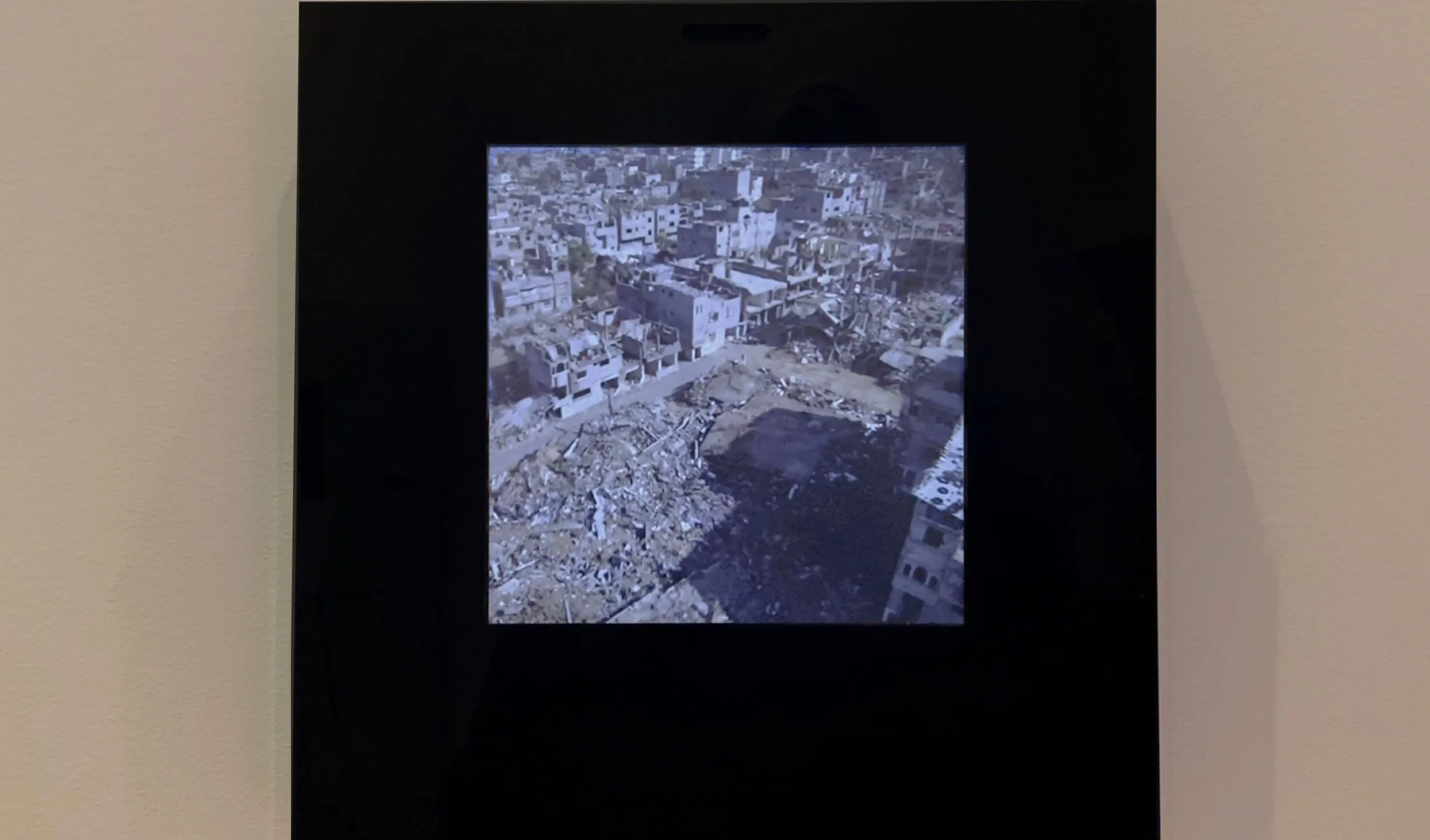
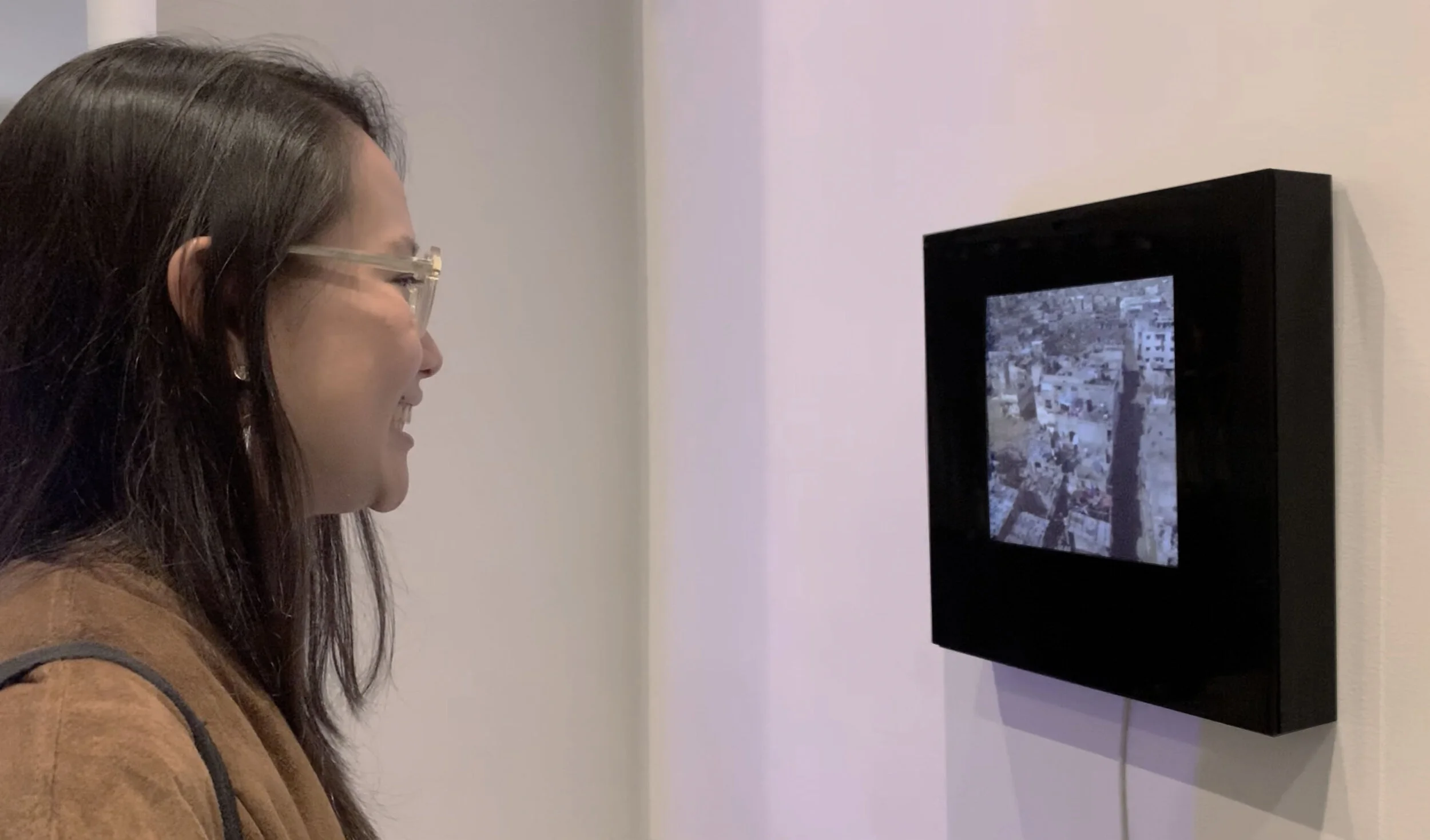
An installation that shows footage of Gaza’s ruins only while a visitor smiles, making the viewing of destruction depend on a performed expression.
Smile responds to the destruction of Gaza during the fifty-day war in 2014. The UN’s subsequent account recorded 2,251 Palestinians killed, including 1,462 civilians, and 11,231 injured; at the height of the hostilities, half a million people had been displaced.
Western cultural relationships with war often frame it from a fascinated, distant perspective: war as entertainment. This spectacle can coexist with practices that do not alleviate the structural power inequalities that produce the conflict.
Smile is a mixed-media installation consisting of a screen situated in a black box, mounted on the wall. The screen is black. However, when an interactor smiles at the installation, drone-footage of the ruins of Gaza, digitally slowed-down by the artist, fades in. If the interactor stops smiling, the video stops. It only plays when the interactor smiles broadly at it.
The installation reflects on the construction of a spectacle from otherwise dramatic news, as well as reflecting on the otherness and dehumanisation of war.
The piece also explores the power asymmetries that technology crystallises where spectators are forced to surrender to the imposed narratives. The piece aims to provide a reflection on the aesthetics of our relationship with it, while simultaneously showcasing the advancements in computer vision and human-computer interaction.
“It's a beautiful thing, the destruction of words.” ― George Orwell, 1984